Focus Keywords: bamboo soap dish with drain tray, bamboo soap dish, removable drip tray, self draining soap tray, bamboo bathroom accessories, soap dish sourcing guide
Slug: bamboo-soap-dish-tray
Meta Description: Compare bamboo soap dish with drain tray designs vs simple bases for sourcing, cleaning, and daily use across retail and hospitality needs.
Alt Text Image: Practical comparison of bamboo soap dish with drain tray and simple base designs in a clean bathroom product sourcing setting.
SERP Analysis Summary for bamboo soap dish with drain tray
Dominant Content Types: product pages, marketplace listings, manufacturer category pages, and a smaller number of home-use buying articles.
Common Formats: short feature lists, image-led product layouts, basic FAQs, use-case notes, and occasional comparison tables.
Observed Angles: design-focused, bathroom organization, eco-style positioning, and product selection. Detailed sourcing comparison content is less common, which creates room for a manufacturer-led decision guide.
Outline
| Section Level | Heading / Subheading | Primary Keyword / LSI Keywords | Search Intent |
|---|---|---|---|
| H2 | Why the right soap dish design matters | bamboo soap dish with drain tray, sourcing guide | comparison |
| H3 | Daily-use problems buyers are really trying to avoid | soap dish drainage, mold risk | problem-solving |
| H3 | Why structure affects both user satisfaction and returns | soap dish design, retail returns | commercial investigation |
| H2 | bamboo soap dish with drain tray | bamboo soap dish with drain tray | comparison |
| H3 | Structural overview: drain tray vs simple base | drain tray, simple base | informational |
| H4 | Two-piece removable tray construction | removable tray soap dish | informational |
| H4 | One-piece slatted or grooved base construction | simple bamboo soap dish | informational |
| H3 | Key functional differences | drainage, cleaning, water management | comparison |
| H4 | How water leaves the soap bar | self draining soap tray | problem-solving |
| H4 | How detachable parts change maintenance | easy clean soap dish | comparison |
| H4 | How trapped moisture changes durability | bamboo soap dish care | problem-solving |
| H2 | Which countertops and usage scenarios fit each type | bathroom soap dish, kitchen sink soap holder | selection |
| H3 | High-humidity and enclosed spaces | humid bathroom soap dish | problem-solving |
| H3 | Open countertops, minimalist bathrooms, hospitality use | minimalist soap dish, hotel soap dish | comparison |
| H3 | Fit with stone, ceramic, wood-look, and metal surfaces | countertop compatibility | selection |
| H2 | Who benefits most from removable tray structures | removable drip tray, user scenarios | selection |
| H3 | Busy households | family bathroom soap dish | problem-solving |
| H3 | Hospitality and hotel channels | hotel amenity soap dish | commercial investigation |
| H3 | Gift and retail customers | giftable bamboo soap dish | selection |
| H2 | Balancing easy cleaning and water accumulation risk | removable tray pros and cons | comparison |
| H3 | Pros of removable trays | easy clean bamboo soap dish | comparison |
| H3 | Cons of removable trays | water pooling soap tray | comparison |
| H3 | Common user pain points and trade-offs | soap dish maintenance issues | problem-solving |
| H2 | Day-to-day maintenance, convenience, and longevity | bamboo soap dish maintenance | selection |
| H3 | How drainage affects lifespan and mold risk | mold risk, bamboo bathroom accessory care | problem-solving |
| H3 | How much upkeep each design usually needs | cleaning frequency soap dish | comparison |
| H2 | Quick comparison for buyers and users | soap dish comparison table | decision-making |
| H3 | Application: sourcing, retail, gifting, customization | custom bamboo soap dish | commercial investigation |
| H3 | Summary table for quick decision making | bamboo soap dish buying guide | decision-making |
| H2 | Sourcing considerations for buyers and distributors | MOQ, customization, packaging | commercial investigation |
| H3 | MOQ, finish options, and packaging implications | custom packaging soap dish | commercial investigation |
| H3 | Recommendations for procurement or custom orders | soap dish procurement advice | action stage |
| H2 | Conclusion: choosing the right structure for the market | bamboo soap dish sourcing | decision-making |
Bamboo Soap Dish with Drain Tray or Simple Base: A Practical Comparison for Sourcing, Daily Maintenance, and User Scenarios
For a buyer, importer, or retailer, a soap dish can look like a simple accessory until daily use starts exposing design weaknesses. The right structure affects how fast soap dries, how often users need to clean the unit, how the countertop stays looking, and how likely the product is to create complaints about standing water or mold. When comparing a bamboo soap dish with drain tray against a simple base design, the decision is usually not about which one is universally better. It is about which one fits the real use environment, customer habits, and product positioning.
As a bamboo soap dish manufacturer, we see both drain trays and simple bases requested for daily-use bath products. Readers planning the next sourcing step may want to review that category page because it gives a more focused look at product direction, structure options, and how a manufacturer presents bamboo soap dish choices for retail, wholesale, and custom development.
Why the Right Bamboo Soap Dish Design Matters for Daily Use and Sourcing
Soap dishes are low-cost items, but they influence the user experience every day. If the dish keeps the soap dry enough, users notice convenience. If it traps water, leaves residue rings, or becomes difficult to clean, users notice that even faster.
From a sourcing perspective, design choice also affects:
- perceived product quality
- cleaning effort after purchase
- packaging dimensions and part count
- return risk for moisture-related dissatisfaction
- fit with hospitality, gift, or minimalist retail programs
Many online listings focus on appearance first. Professional buyers usually need to go further. They need to ask how the product behaves in humid bathrooms, shared households, hotel vanity setups, and kitchens where soap gets wet many times a day.
Daily-use problems buyers are really trying to avoid
The main issues are practical: softened soap bars, water buildup under the dish, residue in corners, and moisture exposure that shortens the useful life of the bamboo. A well-designed structure helps reduce these problems, but no design removes them completely if users never clean the item.
Why structure affects both user satisfaction and returns
Simple products are often judged harshly because users expect them to work without effort. When expectations and actual drainage do not match, complaints rise. This is why structure should be evaluated as a function issue, not just a visual choice.
bamboo soap dish with drain tray
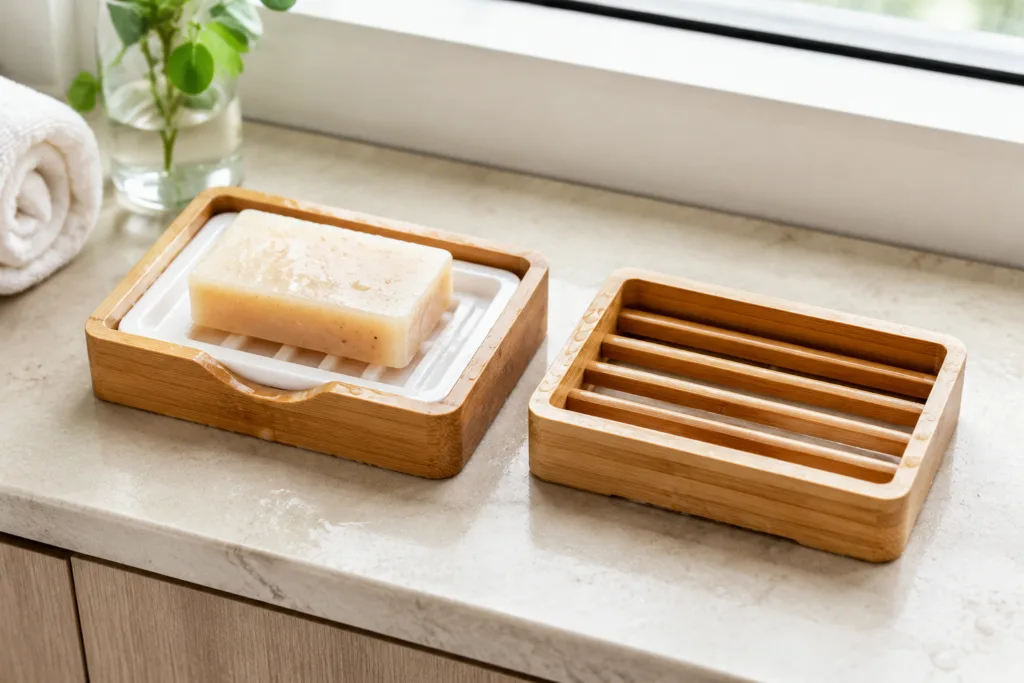
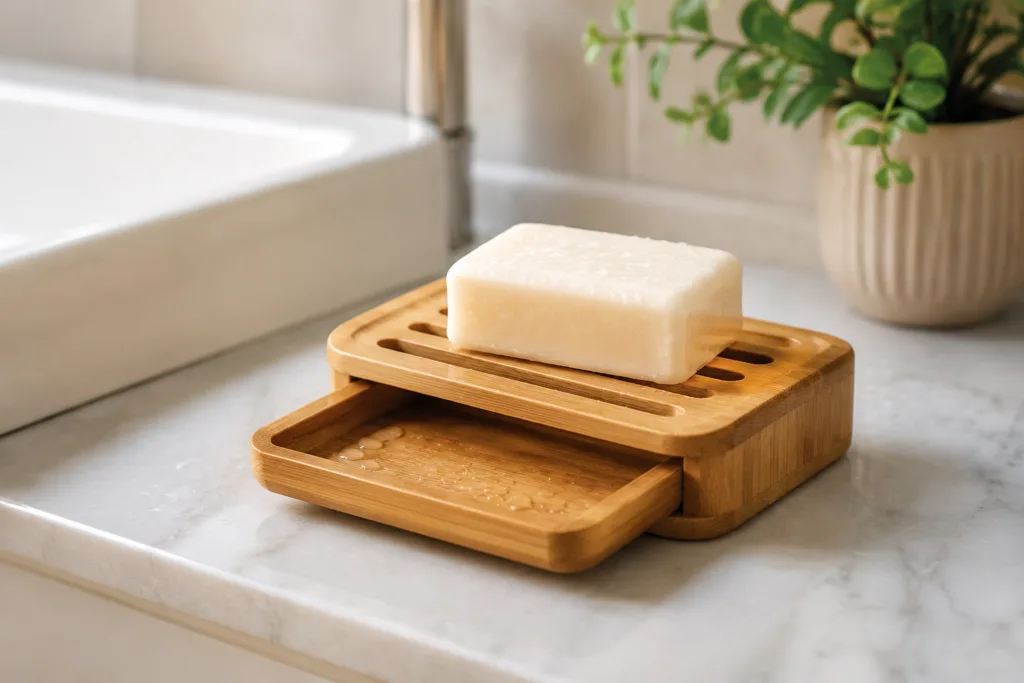
A bamboo soap dish with drain tray usually uses a two-part structure: an upper slatted or grooved holder and a lower tray that catches runoff. A simple base, by contrast, is often a one-piece design with slots, ridges, or feet that lift the soap slightly above the contact surface.
Structural Overview: Drain Tray vs. Simple Base
Two-piece removable tray construction
This version separates soap support from water collection. The upper layer allows water to pass downward, and the lower tray prevents direct dripping onto the countertop. The main value is cleaner countertop management, especially on finished stone, ceramic, or wood-look surfaces where water marks are unwelcome.
One-piece slatted or grooved base construction
Simple base designs reduce part count and often look cleaner visually. They may use open slats, milled grooves, or raised feet to improve airflow. However, they depend more on open exposure and regular wiping of the area beneath the dish.
Key Functional Differences: Drainage, Detachability, Cleaning, and Water Management
How water leaves the soap bar
Both types can help the soap dry, but they do it differently. A drain tray design directs water away from the soap while keeping the counter protected. A simple base relies more on evaporation and on the user keeping the area dry around it.
How detachable parts change maintenance
Detachable designs are easier to rinse thoroughly because the lower tray can be cleaned separately. That said, the presence of a tray also creates one more place where water can stay if users forget to empty or wipe it.
How trapped moisture changes durability
Bamboo performs best when moisture does not remain trapped for long periods. A well-finished soap dish can handle normal bathroom use, but constant standing water is never ideal. At Bamboo Wood Art, this is one of the first practical points we explain to buyers comparing appearance-led designs against maintenance-led designs.
For buyers reviewing adjacent categories, Explore more bamboo products for bathroom and home to see how drainage, finish choice, and product form often work together across different accessories.
Which Countertops and Usage Scenarios Are Best for Each Type
The best design often depends on the setting rather than the product alone.
High-Humidity & Enclosed Spaces
In enclosed bathrooms with weak ventilation, a bamboo soap dish with drain tray often performs better because it creates some separation between wet soap and the surface below. Users can remove the tray, wipe it, and reset the unit without lifting a wet base from the counter each time.
This matters most when:
- the bathroom has little airflow
- multiple people use the same bar soap
- soap is placed near the shower splash zone
- the countertop shows water marks easily
A simple base can still work in these spaces, but it usually demands more discipline from the user.
Open Countertops, Minimalist Bathrooms, Hospitality Use
Simple bases often suit open vanity layouts and minimalist visual styles. They look quieter and may feel more premium when the buyer wants fewer visible components. In hospitality, either structure can work, but the decision depends on housekeeping routines. Properties that clean and reset surfaces frequently may prefer simple, elegant forms. Properties that want easier catch-and-wipe water management may lean toward tray structures.
Readers evaluating channel-specific needs may also find it useful to review Selecting bamboo soap dishes for hotels and amenities, where the discussion shifts toward turnover, presentation consistency, and service practicality.
Fit with Different Bathroom or Kitchen Surfaces
Surface compatibility matters more than many buyers expect.
- Ceramic or porcelain: both designs work well, but trays can reduce visible drip rings.
- Stone countertops: trays often help protect the surface appearance from repeated wet spots.
- Wood-look laminates: contained runoff is usually preferable.
- Metal sink surrounds: simple bases can work if splash is not excessive.
- Kitchen counters: trays are often useful when hand soap stays near sink spray.
Who Needs Easy-Clean or Removable Tray Structures the Most
Busy Households
Families and shared bathrooms usually create the harshest real-world conditions. Soap is set down quickly, water is left behind, and no one wants to deep-clean a soap dish every day. In many cases, a removable tray structure makes routine maintenance simpler because users can separate, rinse, and dry the parts in seconds.
Hospitality/Hotel Channels
For hospitality buyers, easy cleaning is less about convenience and more about labor consistency. If the staff can wipe the tray and support quickly, the product stays presentable longer. Still, a removable design only helps if housekeeping actually removes and dries the tray during routine cleaning.
Gift or Retail Customers
Retail and gift markets often value visual clarity, packaging neatness, and first impression. Simple bases may have a stronger minimalist appeal on shelf. A bamboo soap dish with drain tray may offer more functional selling points, especially when the packaging explains detachable cleaning and countertop protection clearly.
Balancing Detachable Design for Cleaning vs. Water Accumulation Risks
Pros and Cons of Removable Trays
Pros:
- better countertop protection
- easier access for rinsing residue
- clearer separation between soap and runoff
- good fit for splash-prone areas
Cons:
- one more part to clean
- possible water pooling if users ignore the tray
- slightly higher complexity in assembly and packing
- may feel bulkier than one-piece minimalist designs
Common User Pain Points and Practical Trade-Offs
The main trade-off is simple: tray designs make water easier to collect but also create a point where water can sit. Simple bases avoid hidden pooling inside a separate compartment, but they often let water spread underneath or around the unit instead.
This means the better option depends on which problem the buyer wants to reduce:
- Concerned about countertop drips? Tray design often helps.
- Concerned about extra-part maintenance? Simple base may suit better.
- Concerned about frequent soap saturation? Raised drainage structure matters more than appearance.
Buyers comparing broader material strategies can also Compare bamboo and wood product lines when deciding whether the final range should stay fully bamboo-based or include mixed-material bathroom accessories.
Day-to-Day Maintenance and Cleaning Effort: Cost, Convenience, and Longevity
How Drainage Design Impacts Product Lifespan and Mold Risk
No soap dish stays attractive without basic care. The design only changes how easy that care is. Better drainage usually means less constant moisture contact with the soap and the dish itself. That can help preserve appearance and reduce the chance of dark residue buildup in grooves or corners.
Mold risk is usually linked less to bamboo alone and more to trapped moisture plus poor cleaning habits. A drain tray can reduce direct saturation of the top support area, but the lower tray must still be emptied or wiped. A simple base may dry faster in open air, but the underside and countertop need attention.
Maintenance Frequency and User Responsibility
In practical terms:
- Drain tray designs: usually need regular tray wiping plus occasional full rinse.
- Simple bases: usually need lifting, wiping beneath, and periodic scrubbing of grooves or slats.
Neither option is maintenance-free. The question is whether the user prefers cleaning one removable part or cleaning the counter area more often.
Where finish selection matters, carbonized and natural tones may also show water marks and soap residue differently over time. That visual difference can influence retail preference even when function is similar.
Summary Table: Quick Comparison—Which Design Fits Which Buyer/User Type
Application: Sourcing, Retail, Gifting, or Customization
For sourcing teams, the decision should align with target channel expectations, package style, and after-use behavior. A practical household SKU, a hotel amenity item, and a boxed gift product may all require different structure priorities.
Summary Table for Quick Decision Making
| Comparison Point | Bamboo Soap Dish with Drain Tray | Simple Base Soap Dish |
|---|---|---|
| Countertop protection | Usually better | Usually lower |
| Visual simplicity | Moderate | Usually stronger |
| Cleaning style | Separate parts to rinse | Lift and wipe around base |
| Water pooling risk | In tray if neglected | Under or around base |
| Best for humid spaces | Often a better fit | Works best with airflow |
| Retail presentation | Function-led story | Minimalist story |
| Hospitality suitability | Good for structured cleaning routines | Good for sleek visual setups |
| Packaging complexity | Slightly higher | Usually simpler |
| Customization potential | Good for feature-based differentiation | Good for shape-led differentiation |
Sourcing Considerations for Buyers and Distributors
MOQ, Customization, Finish Options, Packaging Implications
When sourcing either design, buyers should review more than shape and dimensions.
- MOQ: two-piece tray designs may involve different tooling or packing logic than one-piece bases.
- Finish options: natural and carbonized appearances influence both style and visible wear pattern.
- Packaging: removable trays may need more stable internal placement to prevent shifting.
- Branding: laser marking, sleeves, inserts, or gift boxes should reflect whether the product is sold as practical utility or a design accessory.
- Range planning: matching soap dispensers, trays, or bath accessories can improve collection consistency.
At Bamboo Wood Art, buyers often review structure choice together with finishing and packaging because the shelf story changes depending on whether the product sells on simplicity, cleanability, or countertop protection.
Recommendations for Procurement or Custom Orders
If the target market values easy upkeep and visible functionality, a bamboo soap dish with drain tray is often the safer direction. If the target market responds more strongly to clean lines, lower part count, and a lighter visual footprint, a simple base may make more sense.
For custom development, it helps to decide early whether the project priority is:
- better drainage performance
- lower visual complexity
- gift-ready presentation
- hospitality cleaning practicality
- broader product-line consistency
That choice influences material thickness, groove pattern, tray depth, finish treatment, and packaging approach.
Conclusion: How to Choose the Right Bamboo Soap Dish Structure for Your Market or Project
The choice between a bamboo soap dish with drain tray and a simple base is usually a choice between two maintenance styles, two countertop behaviors, and two product stories. Tray structures often suit humid, splash-prone, or function-focused use cases where users want runoff better contained. Simple bases often suit open, minimalist, or design-led settings where lower visual complexity matters more.
For buyers and sourcing teams, the most reliable approach is to match the product structure to the real environment, not just the catalog photo. When drainage method, cleaning habit, packaging, and target market are aligned, the product usually performs more consistently and creates fewer surprises after purchase. That is the practical standard worth aiming for in any bathroom accessory program.
Frequently Asked Questions
Is a bamboo soap dish with drain tray always better than a simple base?
No. It is often better for runoff control and countertop protection, but a simple base may be a better fit for minimalist design goals or users who prefer fewer parts.
Which design is easier to clean?
A removable tray design is usually easier to rinse thoroughly because the parts separate, but it also requires the user to empty or wipe the tray regularly.
Does a drain tray reduce soap melting?
It can help by moving runoff away from the soap bar, but soap life still depends on airflow, placement, and how often the dish is cleaned and dried.
Are simple base soap dishes more durable?
They can feel simpler and more stable because they have fewer parts, but durability depends more on finish quality, moisture exposure, and daily care than on one-piece construction alone.
Which type is better for hotel or hospitality projects?
That depends on housekeeping routine and presentation goals. Tray models can support quicker runoff management, while simple bases may suit clean, minimal vanity styling.
What should importers ask a manufacturer before ordering?
They should ask about structure details, finish options, packaging method, tray fit or groove design, moisture-use expectations, and whether the product is positioned for retail, hospitality, gifting, or custom programs.