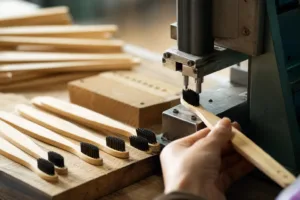
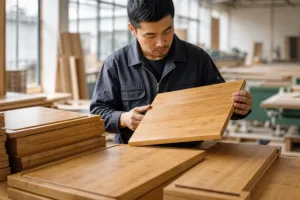
For buyers sourcing a bamboo laptop table for gifts, promotions, and retail, the real question is not only whether the product looks attractive. The better question is whether it can sell quickly, survive shipping, and still leave enough room for branding and margin. In our manufacturing work, the strongest performers tend to be compact, easy to understand, and useful the moment the customer opens the box. That is why structure, finish, packaging, and logo placement matter as much as the bamboo itself.
For teams planning an OEM or private-label program, OEM bamboo laptop table production support can turn a simple concept into a retail-ready product by aligning dimensions, engraving, packaging, and bulk QC before sampling starts. When we develop these tables, we look at how the item will be gifted, displayed, and shipped, then build around those constraints instead of forcing a single design into every channel.
Why Bamboo Laptop Tables Work Well as Gifts, Promotions, and Retail Products
A laptop table is easy to understand as a gift because it solves a clear use case. It supports casual work, reading, browsing, and tablet use at home or while traveling. Good gift products usually need low explanation, practical value, and enough visual quality to feel intentional. According to ergonomic support for laptop use, stable laptop positioning and screen-height improvement can make daily use more comfortable, which is exactly why buyers respond well to a well-proportioned table rather than a novelty tray.
For promotions, the appeal is different. The product must carry a logo cleanly, stay within a controlled cost target, and ship in a compact pack format. For retail, the item must look understandable on a shelf or listing image within seconds. Bamboo helps because its grain gives a warm, natural appearance without requiring heavy decoration. But the design still has to be functional enough to justify the purchase.
What this means for sourcing teams
- Choose a design that reads clearly in one product photo.
- Keep the feature set aligned with the channel, not overloaded.
- Make sure the packaging protects edges, corners, and legs.
- Plan logo visibility before the mold, engraving file, or print screen is approved.
What Makes a Bamboo Laptop Table for Gifts Sell Well
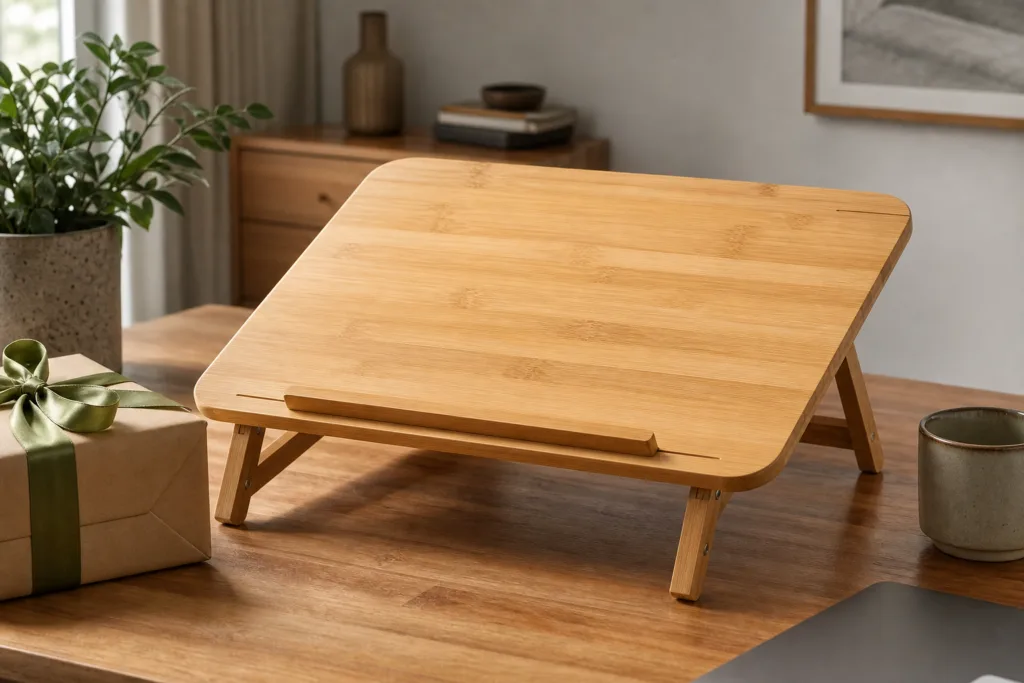
High sell-through usually comes from a mix of usability, presentation, and perceived value. The product should be large enough to work comfortably, small enough to store easily, and simple enough for a buyer to understand instantly. The best-selling versions are often not the most complicated ones. They are the versions that balance function, price, and shelf appeal.
| Sell-Through Factor | Why It Matters | Manufacturer Note |
|---|---|---|
| Clear use case | Customers understand the value quickly | Keep the top surface readable as a work or lap-use platform |
| Moderate size | Fits home storage and shipping cartons | Avoid oversized shapes that raise freight and retail price |
| Useful features | Adds gift value without feeling gimmicky | Limit features to those that improve daily convenience |
| Stable structure | Reduces returns and negative reviews | Test wobble, hinge play, and leg alignment during sampling |
| Gift-ready presentation | Creates a stronger first impression | Use packaging that looks finished, not industrial |
When we review commercial samples, we focus on whether the product can be explained in one line. If the item needs a long explanation, the design may already be too complex for a gift or promo SKU. In retail, clarity is usually more profitable than feature overload.
Best-Selling Size Ranges and Product Formats for Different Channels
Different channels reward different dimensions. Gifting buyers often prefer a table that feels premium but still compact. Promotional buyers want a controlled size that supports branding and bulk packing. Retail buyers usually want a format that sits neatly in a catalog or on a shelf and does not require excessive explanation.
| Channel | Common Size Logic | Format Preference | Buyer Priority |
|---|---|---|---|
| Gift sets | Compact to medium, easy to wrap and display | Flat or lightly angled table | Presentation and perceived value |
| Promotions | Practical surface area with efficient carton nesting | Simple foldable design | Logo space and cost control |
| Retail | Comfortable working surface without bulk | Foldable or adjustable version | Shelf appeal and reorder potential |
| Premium retail | More refined proportions and finish consistency | Feature-rich but disciplined design | Visual quality and margin support |
As a manufacturer, we usually recommend designing around the smallest size that still works well for the intended use. Smaller footprints can reduce freight cost and improve display efficiency, but they must still support a laptop and a mouse or notebook without feeling cramped. If a buyer wants extra perceived value, a useful storage option can make the difference. For example, a bamboo laptop table with drawer can appeal to retail customers who want a cleaner desktop look or a hidden place for accessories.
Design Styles That Perform Well in Retail
Retail sell-through is often driven by the design language buyers see first. A bamboo laptop table that looks balanced, simple, and useful usually performs better than one that adds visual noise. Buyers tend to respond to designs that fit modern home offices, dorm rooms, and casual living spaces.
Minimal and clean-lined
Minimal designs rely on proportion, grain, and surface finish rather than decoration. These are useful for brands that want a natural aesthetic and a broad audience. They are also easier to keep consistent across bulk production because there are fewer visual elements that can vary from unit to unit.
Foldable and storage-friendly
Foldable models are popular because they help with packaging, freight, and shelf storage. If the folding mechanism is too loose, however, the product may feel cheap. If it is too tight, the user experience becomes frustrating. The right balance is a secure fold with smooth opening and closing motion, plus clean edge finishing around moving parts.
Multi-function but disciplined
Some buyers want a table with a cup holder, tablet stand, or accessory slot. These can increase gift appeal if they are integrated carefully. But every added feature should serve a real use case. A crowded surface often weakens the premium feeling. For buyers seeking an added convenience detail without overcomplicating the layout, a bamboo laptop table with phone slot can work well because the feature is obvious, useful, and easy to show in a retail image.
Feature-rich premium look
Premium retail does not always mean more parts. It often means better visual balance, tighter tolerances, and more thoughtful finishing. A subtle contrast edge, a smoother sanding process, or a more refined underside can elevate the product without changing the core structure. When buyers compare two similar listings, these small details often determine which one appears more trustworthy.
Features That Increase Gift Value Without Hurting Sell-Through
Gift buyers usually like the feeling of extra utility. The challenge is adding convenience without making the product look busy. We typically evaluate each feature by asking whether it improves the user’s daily routine or only adds production cost.
- Adjustable angle: Useful for reading, typing, and screen comfort, but it must lock securely and stay stable.
- Foldable legs: Help with storage and shipping, especially for retail and promo orders.
- Tablet slot: Good for mixed-use home and office setups where a second device is common.
- Cup holder: Can improve lifestyle appeal, but it should not weaken the working surface.
- Phone stand: Adds instant gift value when the slot is sized and positioned properly.
- Handle or carry cutout: Makes the item easier to move and can improve perceived convenience.
For clients who want an adjustable form factor, we often guide the design around what can be made reliable at scale. A lightweight adjustment system is attractive, but the real selling point is consistency. An adjustable bamboo laptop stand that wobbles or loosens during use creates more returns than value. That is why stability testing and hinge quality matter as much as the visual style.
Material and Finish Choices That Improve Perceived Quality
Bamboo is not just a visual choice. It affects weight, stiffness, sanding behavior, edge quality, and the way a product communicates sustainability to the buyer. It is also important to remember that bamboo is a grass-based material with its own structure and sourcing considerations, not a generic hardwood. That context is helpful when buyers evaluate appearance, lamination, and consistency across batches, and it is one reason we reference basic material background such as what bamboo is and how it grows when discussing sourcing literacy.
For laptop tables, the finish should make the grain look intentional, not overly glossy unless the brand specifically wants a polished look. A smooth matte or satin finish often feels more modern and less slippery for daily use. The edges should be clean, rounded enough for comfort, and consistent across all touch points. If the product is stain-colored, the tone should not hide the grain completely, because much of bamboo’s value comes from its visible texture.
Finish choices and their effect on selling price
| Finish Type | Buyer Perception | Production Impact | Best Use |
|---|---|---|---|
| Natural oil look | Warm and eco-friendly | Shows grain variation clearly | Gift and lifestyle retail |
| Matte clear coat | Modern and controlled | Supports smoother surface consistency | Broad retail and promo use |
| Light stain | More premium and curated | Requires color matching discipline | Brand-led retail programs |
| Painted finish | Can feel more decorative | Needs strong QC for coverage | Specific style collections |
Edge treatment is especially important because users touch the table at the front edge, corners, and leg joints. A pleasant tactile feel often matters more than buyers expect. If the surface looks attractive but feels rough, the product may underperform in retail even if the photos look good. Good sanding and finishing are not cosmetic extras; they are commercial factors.
Branding Opportunities for Promotions and Retail Sets
Branding should fit the product, not fight it. A laptop table usually offers strong logo opportunities on the top face, lower panel, side panel, or packaging insert. The best location depends on how the buyer wants the item to be seen. A large logo can work for promotions, while a smaller engraved mark may be better for retail.
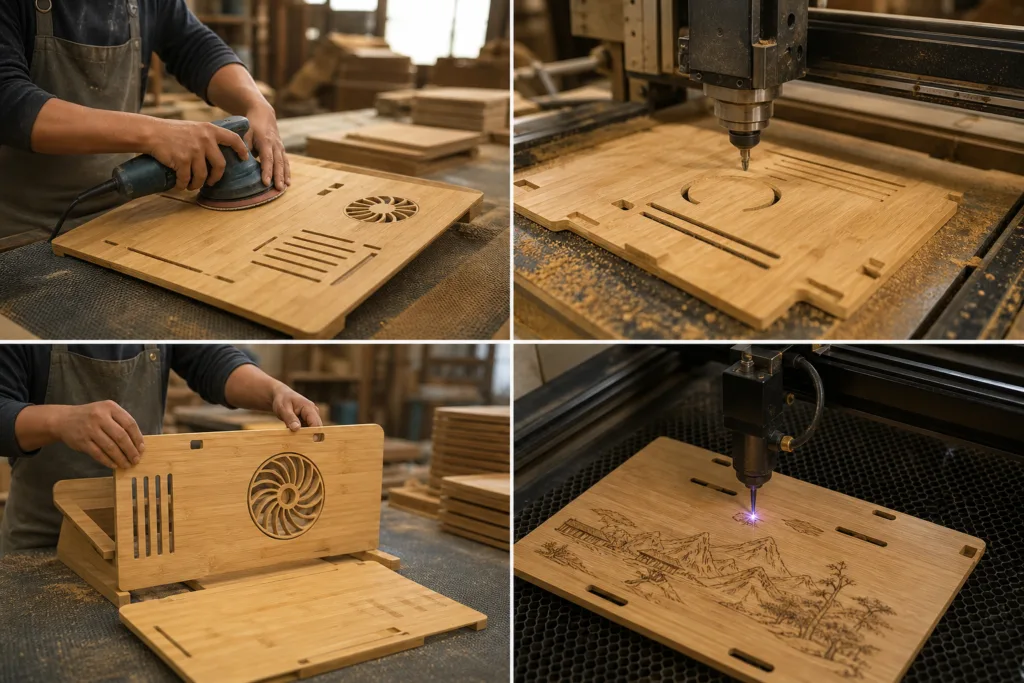
From a production perspective, logo size, contrast, and placement should be confirmed before sampling starts. Laser engraving gives a neat, permanent mark, while printing can support color and sharper artwork if the surface treatment is compatible. A CNC-cut area or recessed panel can also create a premium feel if the design justifies it. For buyers planning custom branding, sizing, and packaging options, the key is to treat the logo as part of the product architecture rather than as a late-stage add-on.
Common branding formats
- Laser engraving: Durable and clean for natural bamboo tones.
- Printed mark: Useful when the brand needs color or specific graphic detail.
- Metal badge or plate: Can raise perceived value but adds parts and assembly steps.
- Custom insert card: Helpful when the product itself should remain understated.
Packaging That Sells Before the Buyer Even Opens the Box
Packaging is often the deciding factor in gift and retail programs. The product may be strong, but if the box feels weak or vague, the perceived value drops. Buyers typically want packaging that protects the item, explains the use case, and fits the channel.
Gift boxes are effective when the item is sold as a present or seasonal bundle. Mailer boxes are useful for ecommerce because they support ship-ready protection and fewer repacks. Retail ready packaging should be clear, stackable, and visually tidy on a shelf. If the product is bundled with a mouse pad, cable accessory, or small notebook, the packaging should organize those pieces so they do not feel loose or accidental.
Packaging choices by channel
| Packaging Type | Strength | Best Channel |
|---|---|---|
| Gift box | Strong presentation value | Gift and premium retail |
| Mailer box | Good shipping protection | Ecommerce and direct-to-consumer |
| Retail carton | Easy shelf display | Wholesale and retail programs |
| Set bundling box | Higher perceived value | Promo kits and gift sets |
Packaging is also part of branding. A simple product can look premium when the insert, label, and outer carton are organized well. In many bulk programs, the packaging decision determines whether a table feels like an everyday utility item or a giftable corporate product.
Retail Buyer Selection Criteria: Price Point, Display Appeal, SKU Simplicity, and Reorder Potential
Retail buyers often think in terms of shelf conversion. They want products that fit a price ladder, are easy to display, and can be reordered without major specification changes. A bamboo laptop table that looks good in a hero image but is difficult to stack, pack, or describe can create headaches later.
When we support retail programs, we usually encourage buyers to narrow the SKU count. Too many variations can dilute inventory and complicate forecasting. One clean natural finish, one engraved option, and one premium version is often more effective than a long list of nearly identical models. The product should also fit into the store’s visual language: modern, simple, and obviously useful.
Retail checklist
- Can the product be understood in three seconds on a shelf or listing?
- Does the price point match the design complexity?
- Will the packaging protect the item during distribution?
- Can the retailer reorder the same spec without constant changes?
Promotional Buyer Selection Criteria: Easy Branding, Fast Production, Useful Function, and Cost Control
Promotional buyers care about message delivery. The product has to support a logo, arrive on time, and stay within a controlled budget. Useful items usually perform better than pure novelty items because the recipient keeps them longer and uses them more often.
For promotions, simpler structures are often safer. A flat or lightly angled table with a clean engraving area is easier to approve, faster to sample, and more predictable in bulk production. The goal is not to create the most feature-rich product. The goal is to create a product that feels like a useful branded gift rather than a disposable giveaway.
Production timing also matters. If the design requires many new parts, complex hardware, or unusual artwork, the lead time can stretch and sample revisions can increase. Promotional buyers are usually better served by designs that already have a clear manufacturing path.
How Brand Clients Should Customize Bamboo Laptop Tables for OEM/ODM Projects
Customization should begin with the intended channel. A gifting program may prioritize packaging and unboxing. A retail program may prioritize feature clarity. A promotional program may prioritize cost and fast branding. At Bamboo Wood Art, we usually start with the buyer’s channel, then move into size, structure, logo method, finish, and carton spec so the final product is aligned with the actual sales plan.
For OEM/ODM work, the most useful customization choices are often the ones that improve consistency. That can mean adjusting the surface size, refining the leg angle, improving the hinge feel, or selecting a finish that hides minor visual variation better. It can also mean choosing between laser engraving and print based on the logo’s complexity.
A practical customization path
- Confirm the use case: gift, promotion, ecommerce, or retail shelf.
- Choose the structure: flat, foldable, angled, or feature-rich.
- Approve logo position and reproduction method.
- Review the sample for finish smoothness, color tone, and edge comfort.
- Validate packaging for shipping, display, and unboxing.
- Lock the QC standard before bulk production starts.
If a buyer wants a premium-looking program, we recommend asking for a prototype that reflects the final surface finish and packaging, not just the core frame. Many sourcing problems appear only after the product is boxed. That is why prototype development from sketch to sample is so important when moving from concept to commercial order.
Common Mistakes That Hurt Sell-Through
Some bamboo laptop tables miss the market not because bamboo is a weak material, but because the design is misaligned with the channel. Oversized tables can look impressive in a factory photo and still fail in retail because they are hard to ship and store. Over-engineering can also hurt a promo order because added features raise cost without adding enough perceived value.
Poor logo visibility is another common problem. If the branding is too small, hidden, or placed where the product’s natural grip or use area covers it, the promo value weakens. Weak packaging can also damage sell-through because a good product inside a flimsy box often looks cheaper than it should. Finally, inconsistent color tone or rough edge finishing can reduce trust even when the structure is sound.
Risks to avoid
- Designing for novelty instead of use.
- Adding features that do not support the buyer’s channel.
- Ignoring packaging strength and carton fit.
- Approving logo placement before reviewing the real sample.
- Skipping stability checks on foldable or angled structures.
Recommended Product Development Checklist for Bamboo Laptop Table Orders
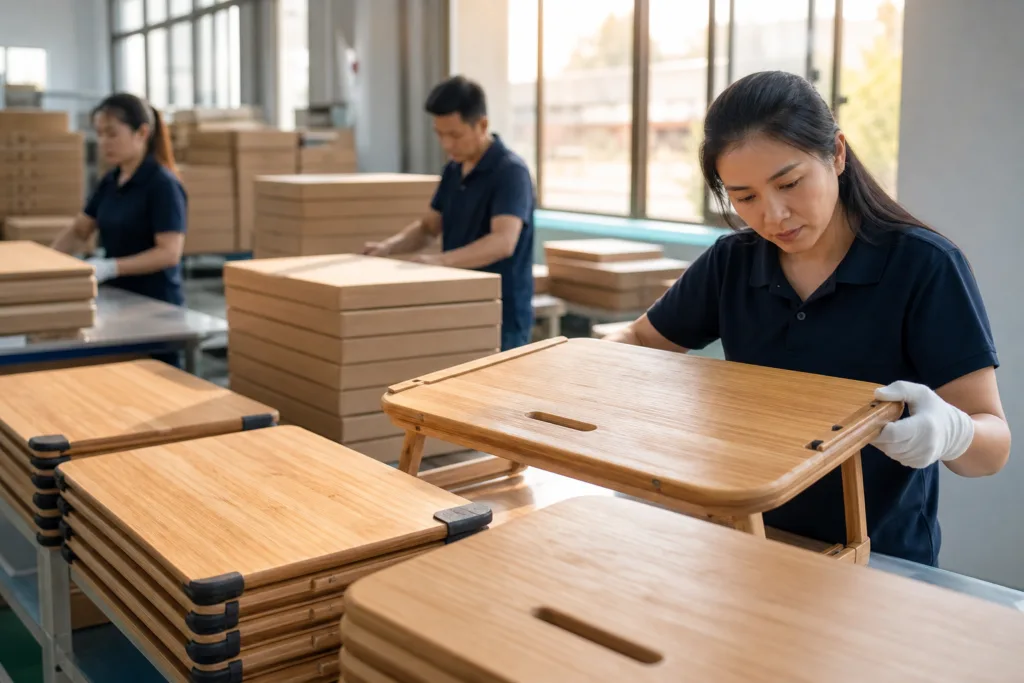
Before moving into bulk production, buyers should confirm a simple but complete checklist. This keeps the project focused and reduces avoidable revision rounds. The best orders are usually the ones where the supplier and buyer agree on function, look, and pack-out details early.
For stability and durability planning, we encourage buyers to ask how the supplier evaluates the finished table, especially if the design folds or supports angled use. Retail buyers should expect a clear discussion of wobble resistance, hinge behavior, and load expectations aligned with table stability and durability testing. Not every project needs formal certification language, but every project does need a shared quality standard.
- Confirmed product channel and target buyer
- Final dimensions and surface format
- Approved logo method and artwork file
- Chosen finish, color tone, and edge treatment
- Packaging style, insert needs, and carton spec
- Sample approval criteria for bulk production
- QC checkpoints for stability, appearance, and packing
When these points are clear, sourcing becomes much easier. That is especially important for private-label buyers who want repeatable programs, not one-off projects.
Conclusion
A bamboo laptop table for gifts can work well across promotions and retail when the design is practical, the finish feels intentional, and the packaging supports the channel. Buyers do not need the most complex product. They need a table that looks credible, performs reliably, and gives enough room for branding and margin. If you focus on structure, logo placement, surface quality, and pack-out details early, the product has a much better chance of becoming a repeat order rather than a one-time sample.
FAQs
What size bamboo laptop table sells best for gifts?
Compact tables that fit everyday lap use and simple shelving usually sell best because they balance comfort, portability, and packaging efficiency. Buyers should choose a size that looks useful on first glance without becoming bulky to ship or store.
Can bamboo laptop tables be customized with a logo?
Yes. Laser engraving, printed marks, badges, and custom inserts are all common options. The best method depends on the brand style, the finish, and whether the product is aimed at promotion, retail, or a premium gift program.
What finish is better for retail: natural, stained, or painted?
Natural and matte clear finishes often work well because they keep the bamboo grain visible and feel modern. Light stains can support a more premium look, while painted finishes need careful QC to avoid coverage issues or a less natural appearance.
How should bamboo laptop tables be packaged for gifting and shipping?
Gift boxes work well for presentation, mailer boxes are useful for ecommerce, and retail cartons help with shelf display. The main goal is to protect edges, legs, and surface finish while making the item look complete when the box is opened.
What MOQ and lead time should buyers expect?
MOQ and lead time depend on the structure, finish, artwork method, and packaging plan. Simpler designs usually move faster through sampling and bulk production, while custom hardware, special colors, or bundled sets can increase planning time.
What should buyers check in samples before bulk production?
Buyers should review stability, hinge movement, surface smoothness, edge comfort, logo clarity, color tone, and packaging fit. A good sample should represent the exact commercial version as closely as possible so bulk production does not create surprises.