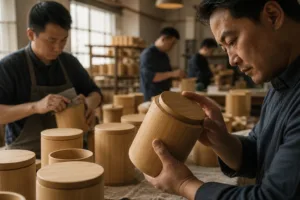
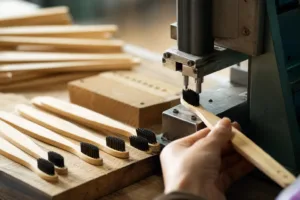
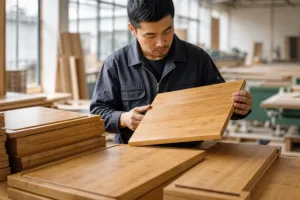
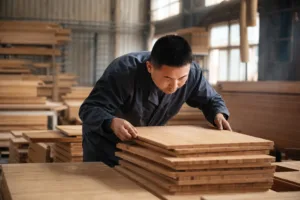
Custom bamboo baskets can be a strong fit for brands that want a natural look, practical storage, and a packaging-friendly product that still feels premium. For private label buyers, the key question is not just whether a basket can be branded, but which parts of the basket can actually be customized without pushing the project into avoidable cost, unstable lead time, or quality risk. From our manufacturing perspective, the best results come when the basket structure, weave style, logo method, and packaging plan are matched to the real use case instead of being treated as independent options.
bamboo basket manufacturing support for custom projects is especially useful when a brand needs to balance appearance, durability, and shipping practicality. At Bamboo Wood Art, we approach these projects by reviewing the basket form, finish, branding method, and carton plan together, because a change in one area often affects the others. That is usually the difference between a custom bamboo basket program that scales smoothly and one that looks good in samples but becomes expensive or inconsistent in bulk production.
What Custom Bamboo Baskets Mean for Brand Buyers
In B2B sourcing, custom bamboo baskets usually means a basket built from an existing or developed bamboo structure and then adjusted for a specific brand, channel, or end use. Customization can be light, such as a logo plate and retail packaging, or deeper, such as a new size, handle style, liner choice, or set configuration. The important distinction is that bamboo basket customization is partly creative and partly structural. Some changes are simple finishing decisions. Others require new development steps, extra tooling, or a more controlled production process.
For brand buyers, these baskets often serve as retail display pieces, home organization products, gift containers, hospitality amenities, seasonal promotion items, and set-based packaging for curated collections. In those cases, the basket is not only a container. It is part of the product story. That means the basket must fit the brand’s visual language, shipping requirements, target price point, and replenishment schedule. If those needs are clear early, the project is easier to quote and easier to produce consistently.
We often advise buyers to think in three layers: the base basket structure, the brand presentation layer, and the commercial layer. The first layer covers dimensions, weave, stiffness, and load-bearing behavior. The second covers logo, color tone, labels, and packaging. The third covers MOQ, lead time, replenishment planning, and carton efficiency. When all three layers are aligned, custom bamboo baskets become a practical sourcing decision instead of a risky design experiment.
When Customization Adds Value, and When It Only Adds Cost
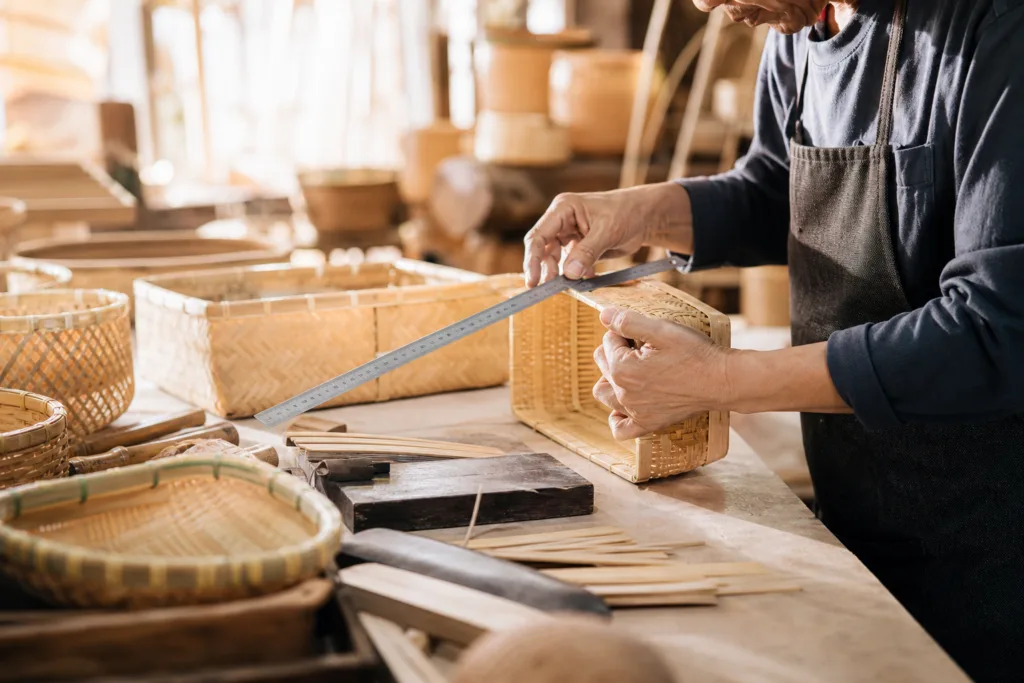
Customization is worth paying for when it improves shelf appeal, strengthens brand recognition, protects the product in transit, or makes the basket easier to sell in a defined channel. For example, a retailer may need a more uniform tone and branded hang tag so the product looks consistent across stores. A hospitality buyer may need a sturdier handle, moisture-tolerant lining, and clearer labeling so the basket works in guest rooms or spa settings. A gift company may need a set of nested baskets, a divider insert, or a ribbon-ready structure that can be packed efficiently.
Customization becomes less valuable when the requested changes do not improve the buyer’s actual use case. Extreme color matching, highly unusual basket geometry, or multiple decorative layers can add cost without increasing sell-through. In other words, a more complicated basket is not automatically a better basket. The right question is whether the customization helps the item perform in the channel where it will be sold.
| Customization Level | Typical Buyer Need | Value | Risk |
|---|---|---|---|
| Light | Logo, label, packaging, minor size tuning | Fastest path to brand fit | Low |
| Medium | New handle, liner, color tone, set layout | Better retail differentiation | Moderate |
| High | New shape, new weave pattern, multi-material build | Strong product uniqueness | Higher MOQ and longer lead time |
From a manufacturing standpoint, the safest projects are usually those that keep the structural basket logic close to proven production methods while customizing the parts that buyers and customers actually notice first. That is why many brands begin with a stock form and then adjust branding, finish, and packaging before they move to deeper structural changes.
What Can Actually Be Customized in Bamboo Baskets
The most useful way to plan a basket project is to separate what is genuinely customizable from what is only partially flexible. Some elements can be adjusted within normal production controls. Others are possible only if the order volume, timeline, and budget support them.
Size and dimensions
Size is one of the most common custom requests. Brands often need a basket that fits a specific shelf width, gift set contents, or internal packaging insert. We can usually adjust length, width, height, rim profile, and nesting depth, but the more the dimensions move away from an existing structure, the more likely the project needs fresh sampling and process tuning. Larger sizes may need more reinforcement. Smaller sizes may require tighter weaving and cleaner edge finishing to remain visually balanced.
Shape and silhouette
Round, oval, rectangular, square, tapered, and shallow tray-like shapes are common starting points. A new silhouette can change the perception of the product significantly, but shape changes also affect production speed and stability. If the requested form is too far from standard weaving or forming logic, the basket may need new jigging or a reworked construction approach. That is why shape changes usually increase both cost and approval time.
Weave style and structure
For woven bamboo items, the weave pattern can be customized to some degree. Tightness, density, strip width, and visual rhythm all affect the final appearance. According to how woven bamboo baskets are manufactured, woven bamboo goods are typically made from thin bamboo strips, which makes the weave itself a defining part of the product structure. For brands, that means the weave is not a decorative afterthought; it is part of the product’s strength, texture, and perceived value.
Liner material and inner finish
Linings can be changed to match the brand’s style or the item’s use case. Cotton, canvas-like fabrics, printed textiles, or simpler inserts may be suitable depending on the basket’s function. A liner can improve presentation, reduce scratch risk, or help with product separation in gift sets. However, liner choices also affect shrinkage, wrinkle behavior, cleaning expectations, and production complexity. If the basket will hold food-related items, the liner and any claims around contact suitability need to be handled carefully and with the right specification language.
Logo plate, tag, and branding system
Branding is usually the highest-value customization for many buyers. Options may include engraved wooden or bamboo plates, metal tags, printed hang tags, woven labels, or laser marking depending on the visual style and budget. For logo-heavy projects, it is often more efficient to keep the basket structure standard and invest more attention in the logo system and packaging. For a deeper comparison of branding methods, see logo decoration methods for bamboo products.
Color tone and surface finish
Basket color can be adjusted through staining, oiling, coating, or controlled heat and drying processes, but bamboo and natural fiber surfaces usually show variation. Buyers should expect some grain and tone difference from piece to piece. If the project requires a more uniform retail look, the finish specification should define acceptable variation rather than promising absolute color sameness. The smoother and more refined the finish, the more attention must be paid to sanding quality, dust removal, and post-finish handling.
Packaging and set configuration
Packaging is often the easiest place to add brand value without changing the basket itself. That can include printed outer cartons, tissue, inserts, instruction cards, barcode labels, and retail-ready sleeves. Set configuration is also important for brands selling baskets as bundles or nesting groups. A single basket can become a more commercial product when it is packaged with a second size, a matching liner, or a seasonal gift card. When planning retail readiness, it helps to think about both shelf impact and warehouse handling.
What Usually Cannot Be Promised Freely
Some requests are technically possible but not realistic as standard customization. Buyers should be cautious about promises that sound simple in a catalog but become difficult in actual manufacturing.
- Major structural redesigns: A completely new body shape or load-bearing architecture may require new samples, new jigs, or a different construction method.
- Extreme color matching: Natural bamboo and woven materials rarely behave like fully controlled plastic finishes. A close tone match is often possible, but perfect sameness across batches is not realistic.
- Very fast first-time development: New product development needs time for sampling, corrections, and approval. Tight deadlines can limit options.
- Complex multi-material builds: Combining bamboo with thick rigid inserts, special metals, or unusual decorative assemblies can increase cost and failure risk.
- Unclear artwork or packaging plans: If logo files, label copy, or carton artwork are still changing, the production line may be slowed by rework.
This is why we encourage buyers to approve the working structure before they finalize decorative detail. In many programs, a stock or near-stock basket body with controlled customization is more reliable than a fully new design that has not been tested for warp, stability, or carton fit.
Custom Bamboo Baskets by Product Type
Different end uses require different customization priorities. A retail display basket, for example, may need a refined finish and excellent stackability. A hospitality basket may need easier handling and low-odor finishing. A seasonal gift basket may need stronger visual branding and better inner protection. Matching the customization plan to the use case is one of the fastest ways to improve sourcing results.
custom bamboo gift basket tray options are a good example of a product family where form and presentation must work together. Trays and shallow basket styles are often chosen for gift sets because they show the contents clearly while still giving the presentation a natural, premium frame.
bamboo storage basket variations with handles are another common category for brand buyers. Handle style can affect both the look and the functional value of the basket. A sturdy handle helps in retail, home storage, and hospitality applications, but it also changes load distribution and weaving requirements.
Retail display baskets
These baskets need clean surfaces, consistent tone, and packaging that looks ready for store presentation. Buyers often request logo placement, barcode labeling, and carton marks that support distribution. The structure should be stable enough to maintain its shape on shelves or in merchandising displays.
Gift baskets
Gift baskets are usually judged first by appearance. That makes color harmony, lining, and set configuration more important than raw structural complexity. Brands often want a balanced combination of basket base, liner, and brand tag so the item reads as a complete gift solution.
Home storage baskets
Here, durability and usability matter more than visual decoration alone. Handles, reinforced edges, and easy-clean surface choices are common priorities. For buyers targeting home organization channels, practical size variation and stackability may be more valuable than decorative embellishment.
Hospitality baskets
Hotel, spa, café, and corporate environment buyers usually want baskets that look natural but remain easy to replenish and clean. In these cases, the finishing method and odor control matter more than highly complex branding. We often recommend simple logo applications and robust packaging so the product survives repeated handling.
For buyers building channel-specific programs, industry-specific basket programs for hospitality and gifts can help frame the right product logic before final specification work begins.
How Bamboo Baskets with Logo Are Made
Branding methods should match the surface and the communication style of the product. A refined logo is useful only if it stays legible and does not compromise the look of the basket. For many custom bamboo baskets, the logo system is planned separately from the basket body, then tested during sampling.
Logo plate options
Logo plates can be bamboo, wood, or metal depending on the desired feel. Bamboo or wood plates create a warm, natural finish, while metal tags can add contrast and perceived structure. Plates are useful when the basket surface itself is uneven or visually busy.
Laser engraving
Laser engraving is a strong choice for simple, durable branding on relatively flat components or attached plates. It works well when the design is clean and the brand wants a natural, understated appearance. However, buyers should check contrast, depth, and legibility on the actual material rather than relying on artwork alone.
Silk screen and printing
Printing can be useful when the logo needs color or when the brand mark is more graphic than tactile. The trade-off is that printed branding may be more sensitive to abrasion, finish type, and curved surfaces. For that reason, the logo method should be matched to the basket’s handling frequency.
Woven labels and hang tags
Labels and tags are low-risk ways to brand a basket without changing the structure. They are especially useful for seasonal or promotional orders, or when the artwork is still being finalized. They also support private label presentation without forcing a more permanent decoration decision too early.
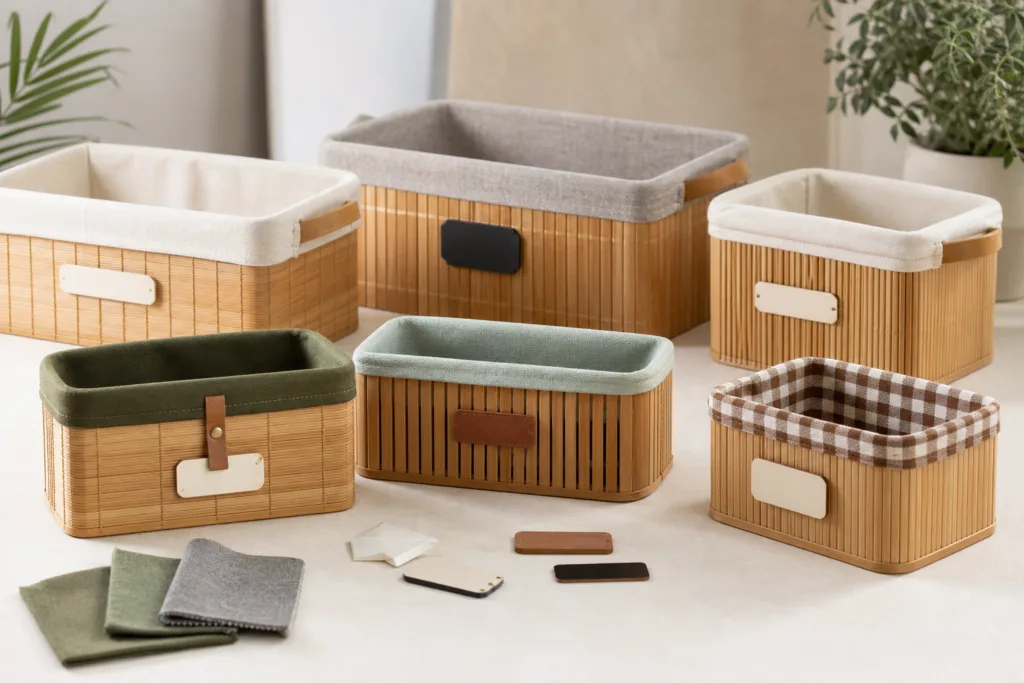
At Bamboo Wood Art, we usually recommend that the logo method be chosen after the surface finish and packaging plan are defined, because all three affect final appearance. A matte finish, for example, may support a more elegant engraved look, while a glossy surface may make printed marks read differently under retail lighting.
Private Label Bamboo Baskets and Packaging
Private label bamboo baskets are not only about the product surface. They are about the whole presentation system. For many brands, the packaging matters as much as the basket itself because it affects first impression, shipping protection, and retail readiness. Private label planning can include outer cartons, product sleeves, care cards, hang tags, UPC labels, and seasonal artwork.
When the order is intended for shelves or e-commerce fulfillment, packaging should be designed for stacking, abrasion resistance, and easy identification in the warehouse. If the basket has a delicate weave or a lighter finish, carton design may need extra protection at corners and handles. Buyers sometimes overlook this and then discover that the product looks good in the sample room but scuffs during transit.
For retail-ready goods, plastic-lite packaging ideas for retail-ready goods can be helpful when you want a cleaner shelf presentation with less unnecessary packaging weight. The right system depends on the channel, not just on the product itself.
Personalized Bamboo Baskets vs Wholesale Custom Baskets
Personalized bamboo baskets usually refer to smaller-run customization with names, event messages, or lighter branding. Wholesale custom baskets are more likely to involve repeatable brand elements, consistent packaging, and production logic built for larger replenishment orders. The difference is not just semantic. It affects approval method, unit economics, and how much control the buyer needs at the sample stage.
For low-volume personalization, buyers often prioritize speed and lower setup effort. For wholesale custom baskets, they usually need steadier color consistency, clearer carton labeling, and repeatable branding across multiple shipments. The more the project needs consistent replenishment, the more important it is to simplify the structure and limit unnecessary customization points.
One practical rule: if the basket will be a one-time event item, personalization can be more flexible. If it is a core SKU, customization should be designed for repeatability, not only for a first-run appearance.
MOQ and Lead Time Drivers
MOQ and lead time are shaped by how many variables change at once. A simple logo change on an existing structure is usually faster than a new shape with new packaging and custom liner sourcing. From a factory planning perspective, each new variable adds coordination time and may require more material preparation, more in-process checks, and more sample approvals.
| Driver | Effect on MOQ | Effect on Lead Time |
|---|---|---|
| New size | May remain moderate | Moderate |
| New shape | Often higher | Longer |
| Custom liner | May increase | Longer if sourced separately |
| Special finish | Can increase depending on process | Moderate to long |
| Private label packaging | May increase with print setup | Moderate |
| Set bundling | Usually higher | Longer due to assembly and pack-out |
Lead time also depends on whether the project is a stock-model modification or a fully new development. Stock-model modification is usually faster because the basket body already exists in a proven form. Fully new development takes longer because sample corrections, production confirmation, and packaging checks all need to happen before bulk production starts.
Specification Checklist for Brands
A clear specification sheet reduces sampling confusion and helps the factory quote more accurately. We recommend that buyers define the following points early:
- exact outer dimensions and acceptable tolerance range
- shape, rim profile, and handle style
- basket use case and estimated load requirement
- weave style or visual density target
- surface finish tone and gloss expectation
- liner material, color, and attachment method
- logo location, size, and decoration method
- packaging format, carton marks, and retail labeling needs
- carton quantity, master pack logic, and shipping constraints
The strongest specifications are not the longest ones. They are the ones that reduce interpretation. If a buyer says “natural finish” without any reference sample or tone expectation, the production team may interpret that differently than the brand expects. If the liner should not shrink, wrinkle, or bleed during handling, that should be stated before sampling instead of after first inspection.
One of the most common sourcing mistakes is treating basket customization like a graphic design project instead of a manufacturing project. The art file matters, but so does the structure, the finishing method, and the packing sequence.
Sample Stage Mistakes Brands Often Miss
The sample stage should be used to catch manufacturing risks before bulk production. Yet many buyers still focus only on appearance. In practice, the sample must prove more than just visual appeal.
- Color reference mismatch: A digital image is not enough. A physical color sample or tone target gives a better basis for approval.
- Artwork format issues: Small logos, thin lines, and fine type may need adjustment for engraving or printing.
- Liner shrinkage: Textiles may behave differently after attachment, especially if the basket is tightly woven or curved.
- Basket rigidity: A basket that feels attractive but flexes too much may not perform well in transport or retail handling.
- Shipping test expectations: The sample should reflect how the product will be packed, stacked, and moved in real shipments.
Good samples are not just attractive. They are informative. They tell the buyer where the production risks are, what needs to be corrected, and what can safely move into bulk order confirmation.
Quality Control Points That Matter Most
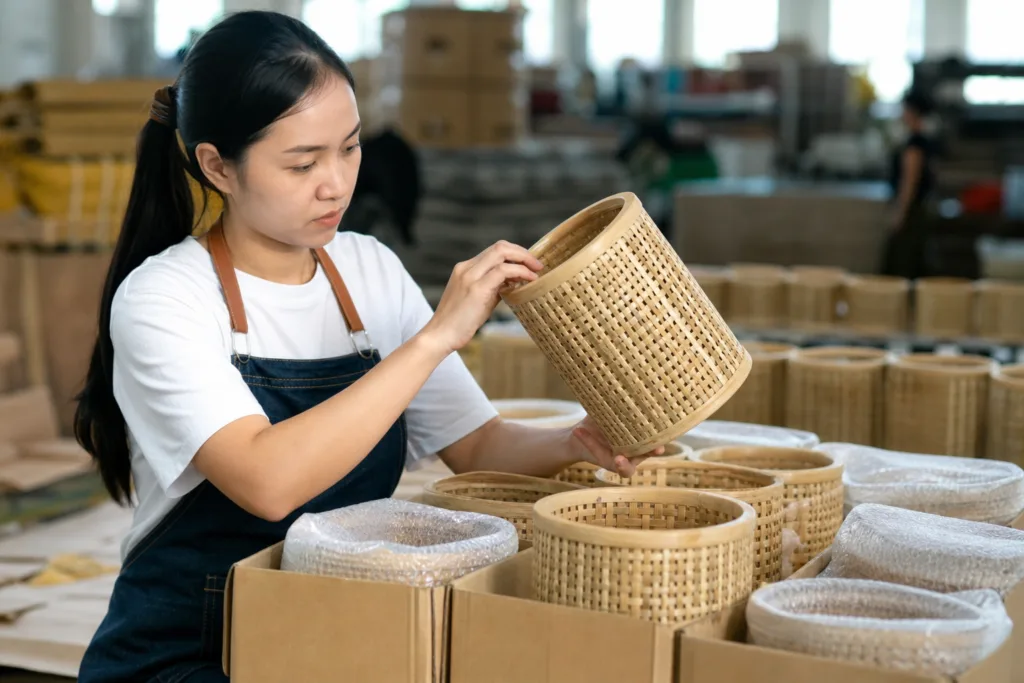
For bamboo basket production, QC should focus on the issues that affect appearance, handling, and shipping durability. The core checks include weave consistency, edge finishing, odor, surface smoothness, load-bearing behavior, and packaging protection. If any one of these is weak, the whole product can feel less professional even if the logo looks fine.
We pay particular attention to edge treatment because rough edges or loose fibers can create a poor hand feel. Surface smoothness matters because baskets are often handled directly by consumers or retail staff. Odor control matters because natural materials can retain finishing or storage smells if drying is not managed properly. And packaging protection matters because woven products can shift, compress, or scrape each other if the carton layout is too loose.
For buyers comparing supplier options, bamboo sourcing guidance for first-time buyers is useful when building a shortlist and defining which QC questions to ask before sample approval. A strong supplier conversation usually saves more time than a rushed quote comparison.
When Custom Gift Baskets Wholesale Makes Sense
Wholesale custom gift baskets make sense when a brand needs repeatable presentation for seasonal promotions, corporate gifting, retail programs, or curated sets. In these orders, consistency matters as much as originality. The basket needs to look good, pack efficiently, and arrive in a condition that supports immediate resale or giveaway.
Gift programs often justify moderate customization because the basket itself is part of the unboxing experience. However, buyers should avoid overbuilding the product if the order is only for a short season or a one-time event. A well-controlled basket with a good finish, branded tag, and strong packaging usually delivers better results than a highly complex build that is difficult to repeat.
When companies want to compare production routes and control levels, OEM and ODM choices for bamboo product buyers can help clarify how much design responsibility should sit with the brand versus the manufacturer.
When Not to Pursue Full Customization
Full customization is not always the right choice. If the order volume is low, demand is uncertain, the deadline is tight, or the artwork is still changing, a full development project can create more risk than value. In those cases, a stock or near-stock basket with selected branding is often the smarter path.
This is especially true when the buyer needs a quick seasonal launch or is testing market response for the first time. A simplified basket can still look premium if the finish is clean, the branding is clear, and the packaging is thoughtful. Many brands start with that approach, then move to deeper customization after they confirm sell-through and customer feedback.
A Practical Decision Framework for Brand Buyers
When evaluating custom bamboo baskets, we suggest asking five practical questions:
- Does the customization improve the basket’s selling power or function?
- Can the requested change be produced consistently in bulk?
- Will the change create meaningful extra MOQ or lead time pressure?
- Is the logo and packaging plan ready enough for sampling?
- Would a lighter customization package deliver almost the same result at lower risk?
If the answer to the first two questions is yes, customization is probably justified. If the order is still unclear on the last three, it is better to simplify the first production run and refine the program later. That approach protects both margin and schedule.
Buyers who are still comparing factory-direct programs often benefit from reviewing factory-direct sourcing vs trading company comparison before they commit to a custom basket run. For many brands, direct manufacturing support is especially useful when the project needs repeated sampling, packaging coordination, and tighter QC control.
Conclusion
Custom bamboo baskets can be highly effective brand products when the customization is targeted, realistic, and matched to the use case. The most practical customization areas are size, shape within reasonable limits, weave style, liner, branding method, finish tone, and packaging. The least practical areas are extreme structural changes, rushed color perfection, and overly complex builds that do not add meaningful commercial value. For brands and private label buyers, the best results usually come from clear specifications, a disciplined sample stage, and a packaging plan that protects both the product and the margin. When those pieces are aligned, custom bamboo baskets become a reliable part of a scalable sourcing program rather than a one-off experiment.
FAQs
What is the usual MOQ for custom bamboo baskets?
MOQ depends on basket size, whether the shape is standard or newly developed, the branding method, and whether packaging is custom printed. A simple logo change on an existing structure is usually easier to support than a full new basket development. If the order includes special liners or bundled sets, MOQ may rise because more materials and assembly steps are involved.
Can I customize the exact color of bamboo baskets?
Color can be guided, but exact matching is difficult with natural bamboo and woven materials. Tone, finish type, and surface preparation all influence the result, and some batch variation is normal. It is better to approve a physical sample or reference target rather than rely only on digital artwork or screen color.
Which logo method works best for bamboo baskets?
The best method depends on the basket surface, the brand style, and how the product will be handled. Laser engraving is usually good for a natural, understated look, while printing works better when color is needed. Plates, woven labels, and hang tags are useful when the basket surface is uneven or when the brand wants a lower-risk branding option.
Can I request a new shape instead of a stock basket?
Yes, but a new shape usually requires more development time, more sampling, and a higher risk of adjustment during production. If the project is time-sensitive or the order volume is small, starting from a stock model is often more efficient. New shapes make the most sense when the design itself is important to the product’s market positioning.
What should I prepare before asking for samples?
Prepare dimension requirements, logo artwork files, finish tone direction, liner preference, packaging expectations, and any target retail or shipping constraints. If possible, provide a reference image or a physical benchmark for color and presentation. The clearer the input, the fewer sample revisions are usually needed.
Are custom bamboo baskets suitable for food or hospitality use?
They can be, but the basket structure, finish, liner, and intended contact situation all need to be defined carefully. Hospitality baskets often need easy-clean surfaces, controlled odor, and durable handles, while food-adjacent use may require additional attention to materials and packaging. The product should be specified for its actual use, not just its appearance.