Introduction: Why Quality Standards Matter in Bulk Bamboo Chopsticks for Restaurants
Bamboo chopsticks are a staple in many restaurant environments, offering both sustainability and a pleasing dining experience. However, for procurement teams tasked with sourcing bulk bamboo chopsticks, attention to consistent quality is far more than a box-ticking exercise—it shapes diner satisfaction, impacts operational efficiency, and protects against supply chain risk. Evaluating the right standards early helps avoid problems downstream, from customer complaints to increased wastage or hidden costs.
For a more focused look at our restaurant-grade bamboo chopsticks manufacturing capabilities, including material options and customization directions, readers comparing product options may also want to review our restaurant-grade bamboo chopsticks manufacturer overview. This in-depth page provides Bamboo Wood Art’s core product range, finishing, and development options for bulk buyers planning or refining their next sourcing step.
Commonly Overlooked Quality Indicators in Restaurant Chopsticks Procurement
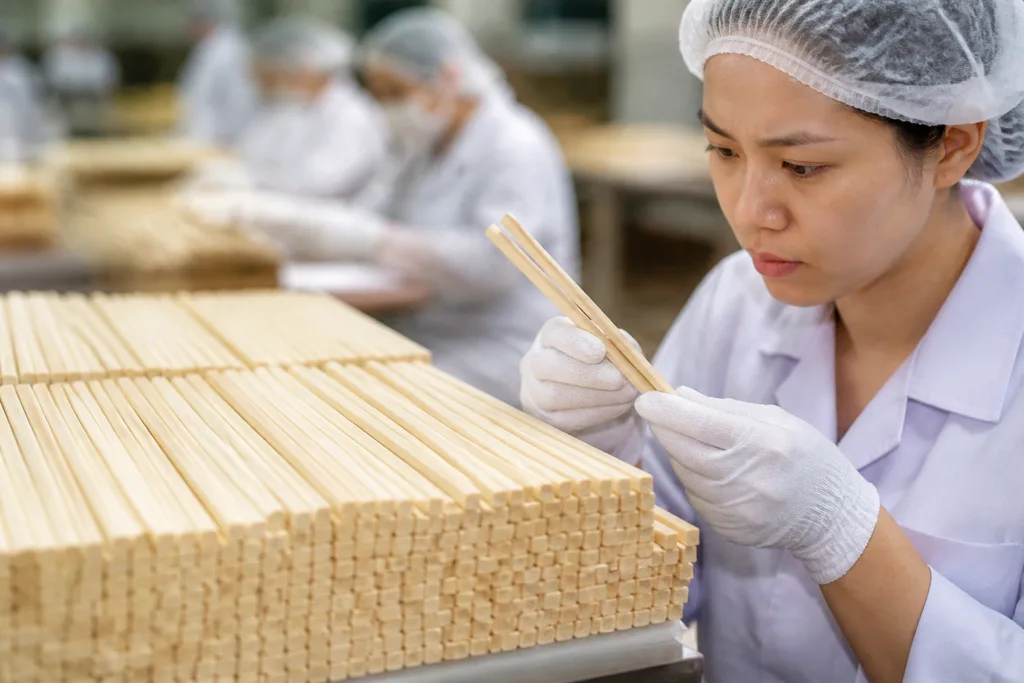
Beyond Appearance: Safety, Consumer Experience, and Downstream Implications
While initial visual checks can filter out obviously defective chopsticks, many less visible factors affect real-world restaurant performance. For bulk bamboo chopsticks, overlooked indicators often include splinter risk, hidden burrs, uneven finishing, residual odors from processing, or even subtle material flaws that only surface after extended use or storage. Each impacts not just immediate food safety but also guest perception, cleaning routines, and brand trust over time.
Impact of Minor Defects in Bulk Settings
In a high-volume food service context, even infrequent defects multiply rapidly. A defective batch can disrupt service, compromise hygiene, or necessitate unexpected reorders—affecting both cost and reputation. Spotting these issues at the sourcing and inspection stage is far more efficient than relying on in-restaurant checks.
Dimensional Consistency: Evaluating Length, Diameter, and Weight Tolerances
Why Precise Sizing Matters
Consistent length, diameter, and weight are essential in restaurant-grade bulk bamboo chopsticks. Variability can undermine the dining experience by making utensils feel mismatched or awkward, reflecting poorly on your restaurant brand. Uniformity also supports easy packaging and portion control, minimizing operational hassle.
Acceptable Tolerances for Restaurant Use
Most buyers set tolerance limits—typically +/- 1mm for length and diameter, and minor allowable variations in weight. These standards help ensure chopsticks fit holders or sleeves and support predictable performance.
Practical Methods for Onsite or Pre-Shipment Measurement
Procurement teams can request third-party or supplier-provided measurement protocols. Common approaches include random sampling with digital calipers, weight scales, and batch reports. Asking for sample sets from different batches (not just one) helps identify manufacturing variation before the main order is shipped.
Inspecting for Burrs, Cracks, Warping, and Off-Odors
Physical and Visual Sample Checks
Visual inspection is fundamental: well-made chopsticks should be free of visible splinters, cracks, or rough edges. Running fingers along the length quickly reveals burrs, which are safety hazards and disrupt comfort in use. Warping—where chopsticks bend or twist—is a practical challenge for both diners and staff, often resulting from poor drying or subpar bamboo selection.
What Constitutes a Defect—and When to Reject
The main red flags include: exposed bamboo fibers, splits or cracks, significant curvature, or unusual odors (chemical or mildew-like). For restaurant-grade bulk orders, even a small defect percentage may trigger batch rejection, since customer exposure risks increase with scale.
Defect Types That Affect Restaurant Environments
- Loose fibers or splinters: risk for mouths and hands
- Cracks: structural weakness and hygiene risk
- Warping: chopsticks roll or don’t grip food properly
- Off-odors: impact food taste and confidence
Packaging Integrity and Transit Loss Rates
Checking for Complete Packaging, Sealing, and Protective Layering
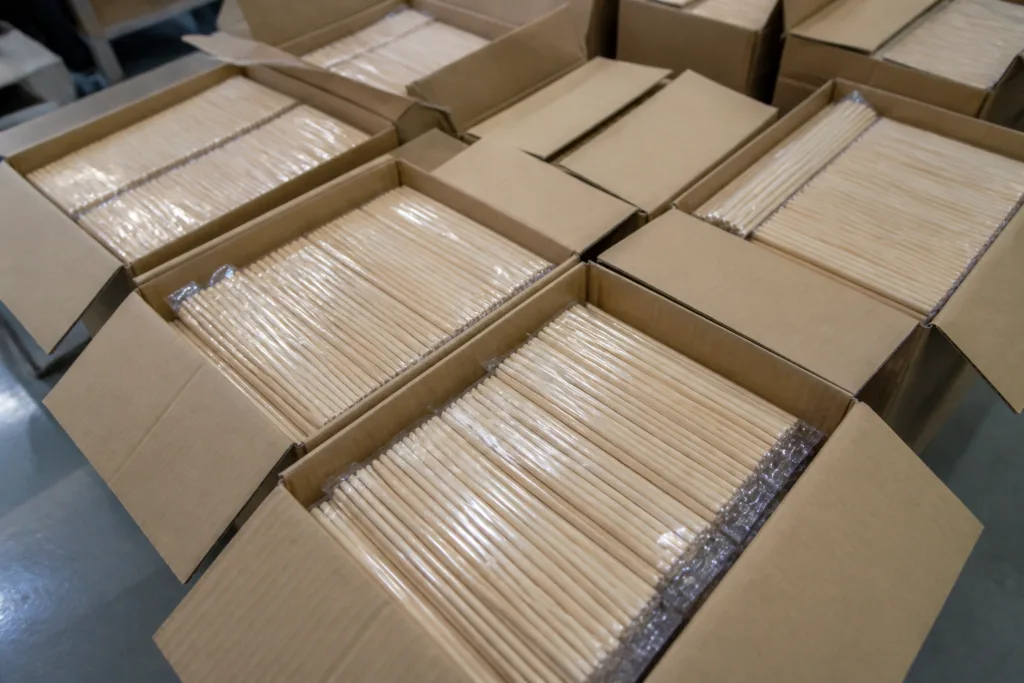
Packaging quality directly affects product condition upon arrival. For bulk bamboo chopsticks, strong paper wraps, shrink films, or inner boxes prevent chipping, dust, and moisture uptake. Well-sealed packaging also reduces post-delivery cleaning needs.
Assessing Loss Rates and Supply Chain Cost Implications
High transit loss—due to broken, bent, or exposed chopsticks—raises replenishment and waste costs. Request both the supplier’s packaging specs and historical loss rates. Even small percentage losses add up quickly in high-volume use, especially for restaurants managing tight stock rotation.
Moisture Risks: Chopstick Performance in Humid Environments
How Moisture Absorption Shapes Performance and Hygiene
Bamboo’s cell structure makes it naturally moisture responsive. If chopsticks are inadequately dried or made from immature bamboo, they readily absorb humidity—resulting in shape distortion or, over time, mold risk. High residual moisture also promotes bacterial growth, undermining food safety if not addressed at the manufacturing stage.
Recognizing Signs of Improper Drying or Subpar Bamboo Material
Key warning signals include inconsistent coloration, a slightly spongy texture, surface “bloom” or speckling, or a persistent grassy odor. For sourcing teams, requesting drying process details from suppliers is a sensible precaution, as is testing moisture content in sample batches.
Sample Testing: Best Practices Before Finalizing Your Bulk Order
Sensory and Stress Testing Recommendations
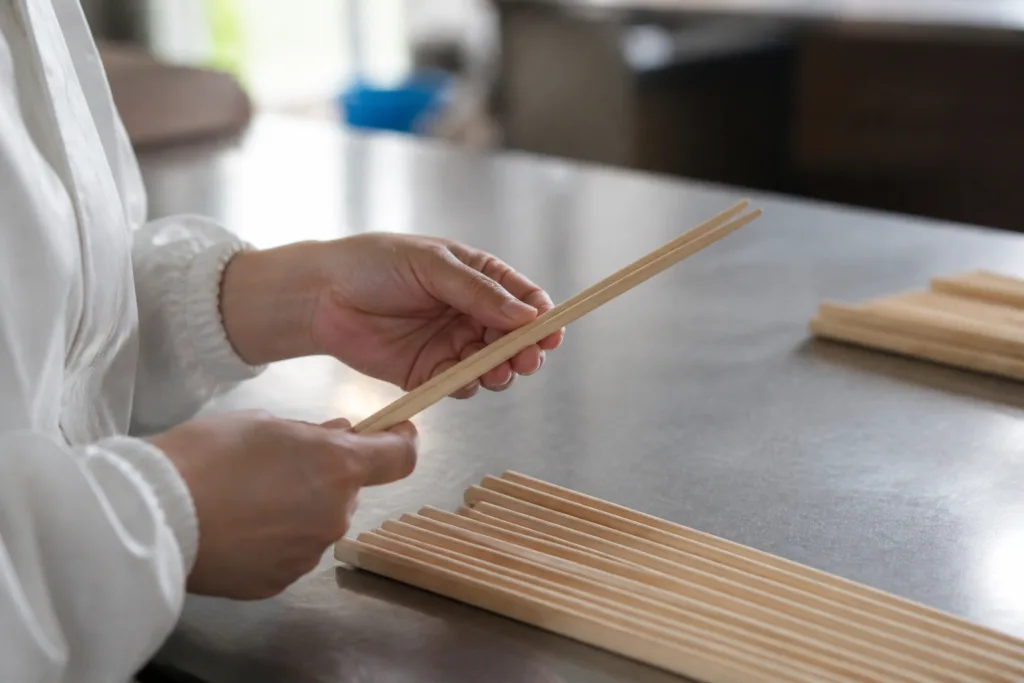
Sample evaluation is essential before any significant purchase. Begin with tactile tests: is the finish smooth throughout, does the chopstick emit any odd smell, and does it feel robust when gently flexed? Stress testing—carefully attempting to flex or break—helps gauge structure and finish adherence. Visual checks in both natural and artificial lighting reveal subtle finish or surface flaws not always apparent at first glance.
Communicating Feedback to Suppliers
Procurement teams should document all concerns clearly, including photographs if needed, and provide this structured feedback before order finalization. Transparent communication supports supplier quality improvements and helps avoid repeat faults on future runs. Suppliers responsive to sample feedback are generally more reliable collaborative partners.
Quality Inspection Checklist for Procurement Teams
A robust factory or pre-shipment inspection process relies on clear, actionable criteria. Below is a practical checklist for evaluating restaurant-grade bulk bamboo chopsticks:
- Material: Confirm mature, well-dried bamboo is used
- Dimensions: Measure length, diameter, and weight across a sample size
- Finish: Check for uniformity, no rough edges, and smooth surface
- Defects: Look for cracks, splits, or sharp burrs
- Packaging: Assess the strength and sealing of inner and outer wraps
- Moisture: Test for residual dampness or odor suggesting improper drying
- Odor: Note any chemical or musty smell
- Functional Test: Try picking up food, grip quality, and comfort
(For a broader understanding of production capabilities and product scope, see our complete bamboo product manufacturing options.)
Linking Inspection Outcomes to Supplier Selection
Is the Bamboo Chopsticks Supplier Up to Restaurant Standards?
Results of your inspections and sampling directly inform supplier reliability. Consistent performance across batches indicates a strong quality culture and controlled factory processes. Procurement teams should also confirm whether the supplier can provide documentation on materials, processing, and previous clients—though these claims should be checked independently (see our guide on how to verify a bamboo manufacturer’s credentials).
Red Flags That Should Prompt Further Investigation
- Inconsistent quality between samples and mass batches
- Unwillingness to share production or drying process info
- Poor responsiveness to feedback during sample testing
- Frequent small packaging losses or repeated minor defects
Restaurant-Grade Bulk Bamboo Chopsticks: Key Quality Inspection and Sourcing Standards for Procurement Teams
Restaurant-grade bulk bamboo chopsticks require a sourcing approach that reaches beyond surface inspection. By setting practical, enforceable standards—for material selection, dimensional precision, finish, packaging, and supplier processes—procurement teams reduce risk while elevating restaurant quality. At Bamboo Wood Art, our experience shows that close cooperation at the early sourcing stage pays dividends in both reliability and brand perception.
Conclusion: Raising the Bar for Restaurant Chopsticks Quality in Bulk Procurement
Thoughtful procurement of bulk bamboo chopsticks goes beyond appearance. Focusing on quality checks—like dimensional tolerances, burr and crack inspection, moisture control, and protective packaging—drastically reduces hidden costs and improves diner satisfaction. Investing in robust sample testing and transparent supplier communication builds consistency batch after batch. With these standards in place, restaurant buyers set themselves up for fewer complaints, lower loss rates, and a more reliable sourcing workflow. As with all material-intensive products, diligence and clarity at the procurement stage build long-term value in the supply chain.
Frequently Asked Questions
What are the most common defects in restaurant-grade bulk bamboo chopsticks?
The most frequent issues include burrs, cracks, warping, and residual odors from improper finishing or drying; these can impact usability and hygiene.
How can procurement teams check dimensional consistency in a bulk order?
Randomly sample and measure length, diameter, and weight using digital calipers and scales, ensuring they meet set tolerances before approving shipment.
How does moisture content affect bamboo chopsticks in food service environments?
Excess moisture can cause warping, mold, and hygiene risks, so bamboo should be properly dried and inspected for signs of dampness before use.
Why is packaging integrity critical for bulk bamboo chopsticks?
Strong packaging prevents transit damage, reduces contamination risk, and helps control supply chain costs from lost or broken chopsticks on arrival.
What best practices ensure reliable sample evaluation before a bulk order?
Conduct both tactile and visual tests, record and communicate findings to suppliers, and insist on addressing any detected issues before finalizing orders.
What supplier red flags should prompt further investigation?
Signs include inconsistent quality across batches, reluctance to share material or process details, and a lack of responsiveness to inspection feedback.