Focus Keywords: high quality bamboo steamer, bamboo steamer quality, bamboo steamer inspection, bamboo steamer buyer guide, bamboo steamer manufacturer
Slug: high-quality-bamboo-steamer
Meta Description: high quality bamboo steamer guide with practical inspection steps for buyers, importers, and sourcing teams.
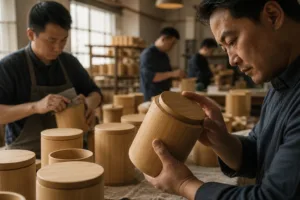
Alt Text Image: sourcing team reviewing a high quality bamboo steamer with close attention to rim fit, weaving, and finish quality
SERP Summary for high quality bamboo steamer
Dominant Content Types: product pages, cookware buying guides, food blog recommendations, and marketplace listings.
Common Formats: product comparisons, short selection tips, FAQs, feature lists, and basic material notes.
Observed Angles: buyer-friendly and home-use focused, with less depth on factory quality control, sourcing inspection, and manufacturing logic.
Outline
| Section Level | Heading / Subheading | Primary Keyword / LSI Keywords | Search Intent |
|---|---|---|---|
| H2 | Introduction: Why Quality Matters Beyond Appearance | high quality bamboo steamer | informational |
| H3 | Why a good-looking steamer can still fail early | bamboo steamer quality | decision-making |
| H3 | Who this checklist is for | bamboo steamer buyer guide | commercial investigation |
| H2 | Material and Construction: What Defines High-Quality Bamboo Steamer Build | high quality bamboo steamer | decision-making |
| H3 | Bamboo strip selection and consistency | bamboo strips, bamboo grade | informational |
| H4 | Thickness, flexibility, and fiber stability | bamboo material quality | informational |
| H3 | Weaving quality and basket structure | bamboo weaving techniques | decision-making |
| H4 | Uniform gaps versus uneven spacing | bamboo steamer weaving | scenario-solving |
| H3 | Circle rim integrity and edge strength | bamboo rim quality | decision-making |
| H4 | What smooth finishing should look and feel like | surface finish bamboo | informational |
| H3 | Manufacturing methods that affect durability | bamboo steamer manufacturing | commercial investigation |
| H2 | Lid Fit and Steam Circulation: Functional Quality Indicators | high quality bamboo steamer | decision-making |
| H3 | How to check lid fit by hand | lid fit bamboo steamer | scenario-solving |
| H3 | Why tight but balanced fit matters | steam circulation, steam efficiency | informational |
| H3 | Signs of strong lid construction | bamboo steamer lid quality | decision-making |
| H2 | Surface Finish: Burrs, Odor, Loose Structures | bamboo steamer inspection | decision-making |
| H3 | Checking for burrs and rough spots | bamboo burrs, rough finish | scenario-solving |
| H3 | Natural bamboo smell versus defect odor | bamboo odor inspection | informational |
| H3 | How to spot loose or uneven weaving | loose bamboo weaving | decision-making |
| H2 | Layer Stability and Long-Term Durability | bamboo steamer durability | decision-making |
| H3 | How to test interlayer stability | stack stability bamboo steamer | scenario-solving |
| H3 | Failure points in poorly joined layers | joined layers, basket failure | informational |
| H3 | Expected lifespan and maintenance logic | bamboo steamer lifespan | informational |
| H2 | high quality bamboo steamer | high quality bamboo steamer | decision-making |
| H3 | What this keyword should mean in real buying terms | quality assessment bamboo steamer | commercial investigation |
| H3 | What buyers should not confuse with quality | cheap vs quality bamboo steamer | comparison |
| H2 | Quick Inspection Checklist Upon Delivery | bamboo steamer inspection checklist | action stage |
| H3 | What to check first when the carton is opened | delivery inspection bamboo steamer | action stage |
| H3 | Simple quality assurance steps for receiving teams | receiving QA checklist | action stage |
| H3 | How to document and flag issues for suppliers | supplier communication quality issue | action stage |
| H2 | Buyer’s Checklist: Essential Criteria Summarized | bamboo steamer buyer checklist | action stage |
| H3 | Fast-reference checklist for sourcing teams | buyer checklist bamboo steamer | action stage |
| H3 | What matters most in bulk decisions | bulk bamboo steamer sourcing | commercial investigation |
| H3 | OEM and customization questions worth asking | OEM bamboo steamer | commercial investigation |
| H2 | Conclusion: How Quality Impacts Use, Retail, and Sourcing Decisions | high quality bamboo steamer | decision-making |
| H2 | Frequently Asked Questions | bamboo steamer FAQ | informational |
7 Practical Checks for a High Quality Bamboo Steamer That Help Buyers Avoid Costly Mistakes
A high quality bamboo steamer is not defined by appearance alone. Many steamers look clean and attractive when first unpacked, yet show problems after only limited use or after a short retail cycle. For sourcing teams, importers, and retailers, the real question is not whether the basket looks traditional. It is whether the material, fit, finish, and assembly are reliable enough for repeat use, consistent presentation, and smooth supply decisions.
As a custom bamboo steamer manufacturer, we know that quality starts with the details. Readers planning the next sourcing step may want to explore how this category is presented from a manufacturer perspective, especially when comparing structure, finish choices, size options, and development direction for wholesale or private-label programs.
One common mistake is to treat bamboo steamers like simple handcrafted accessories. In practice, they are functional cookware products. They are exposed to steam, heat, repeated handling, storage changes, and sometimes long shipping routes. That means weak rims, poor lid fit, rough edges, or unstable layers quickly become real product issues. A buyer who inspects only color and shape can miss the construction signals that matter most.
This guide is written as decision content for buyers in the filtering and selection stage. The goal is practical: help you assess quality by hand, reduce avoidable claims, and ask better questions before you place or repeat an order.
Introduction: Why Quality Matters Beyond Appearance
Why a good-looking steamer can still fail early
A neat surface can hide weak structure. Some steamers are polished enough to pass a quick visual check but still have uneven bamboo strips, loose weave tension, or rims that are not properly aligned. These problems may not show up until the unit is stacked, steamed, or handled several times.
Who this checklist is for
This article is most useful for importers, wholesalers, retailers, brand owners, and sourcing teams who need a clear way to judge a bamboo steamer before committing to larger volumes. It is less about cooking features and more about physical quality assessment.
Material and Construction: What Defines High-Quality Bamboo Steamer Build
Bamboo strip selection and consistency
The first sign of a high quality bamboo steamer is consistency in the bamboo itself. The strips should look reasonably uniform in width, thickness, and tone, with no obvious cracking, splitting, or overly dry edges. Natural variation is normal, but large variation often points to weaker material sorting or rushed production.
Thickness, flexibility, and fiber stability
Good bamboo strips usually feel stable without becoming brittle. If the strips are too thin, the basket may lose shape more easily. If they are too thick and stiff, weaving tension can become uneven and the final basket may not sit flat. The best balance depends on steamer size, but the material should always feel intentional rather than random.
Weaving quality and basket structure
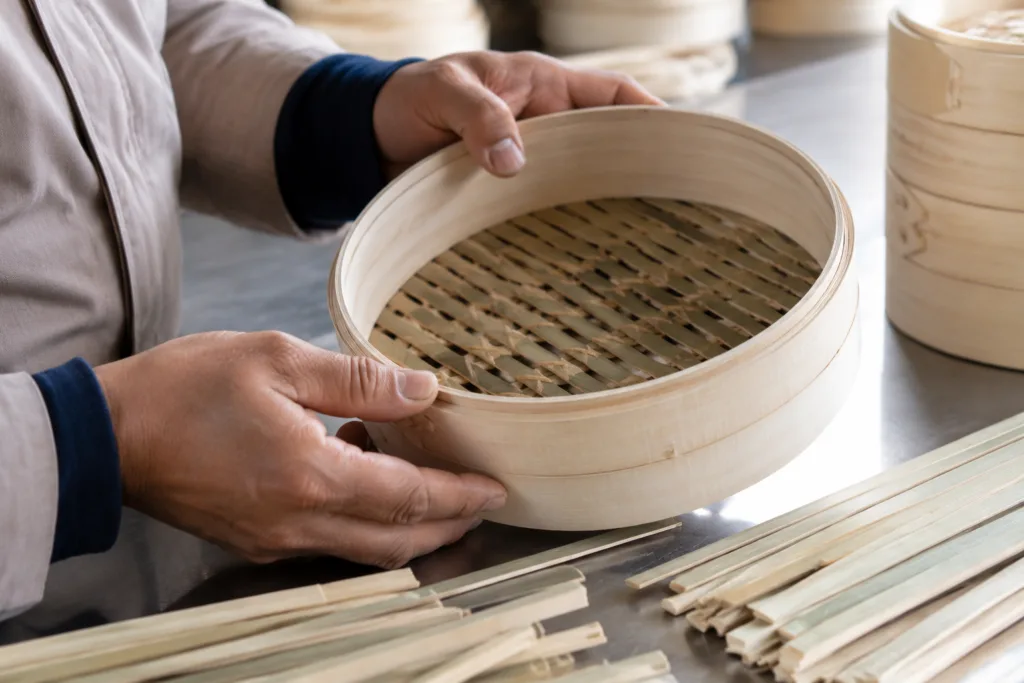
Weaving is not just decorative. It directly affects how the basket distributes pressure, handles moisture, and keeps its shape over time. Check whether the weave pattern is even and whether the crossing points hold their position without lifting.
Uniform gaps versus uneven spacing
Small differences are normal in handmade or hand-finished products, but major gap changes can create weak spots. Uneven spacing may also affect airflow and surface support for food liners. In many cases, tighter and more regular weaving gives a better balance of function and presentation.
Circle rim integrity and edge strength
The rim carries a large part of the basket’s structural load. A weak rim can warp, crack, or lose shape, especially in stacked use. Inspect the circular shape from eye level. The rim should look round rather than oval or distorted, and the joint area should feel secure.
What smooth finishing should look and feel like
Run a hand lightly around the edge. A high quality bamboo steamer should feel smooth, with no splinters, sharp cut points, or rough joins. Fine handwork is not only about comfort. It reduces the chance of fiber lift during repeated use and improves retail presentation.
Manufacturing methods that affect durability
Different factories use different production balances between hand assembly and fixture-based shaping. What matters is not whether the product is fully handmade or partly standardized, but whether the method creates repeatable shape, stable joints, and consistent finishing. At Bamboo Wood Art, this is often where experienced buyers separate attractive samples from dependable production items.
Buyers comparing construction approaches may also benefit from reviewing broader bamboo steamer best practices, especially when judging how design choices affect use, care, and long-term product stability.
Lid Fit and Steam Circulation: Functional Quality Indicators
How to check lid fit by hand
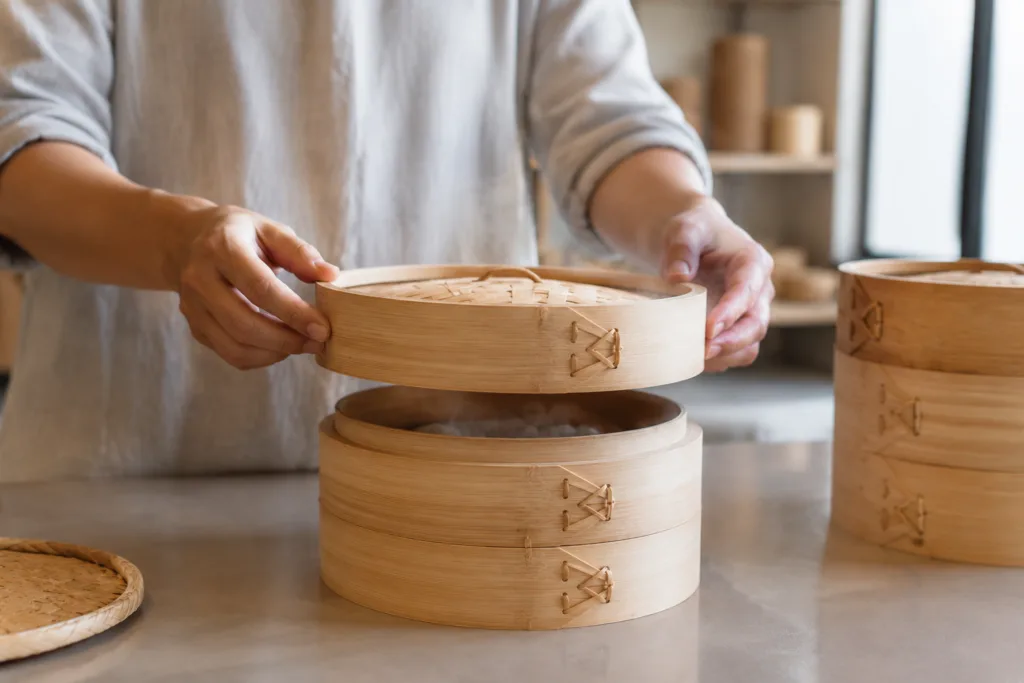
Place the lid on the basket and rotate it gently. It should sit securely without major wobble. The fit does not need to be airtight, but it should be balanced. If one side sits high or the lid rocks noticeably, the basket or lid may be out of shape.
Why tight but balanced fit matters
Steamers work through controlled steam circulation, not sealed pressure. A lid that is too loose may release steam unevenly and reduce cooking consistency. A lid that binds too tightly may indicate poor shaping or swelling risk. Usually, the best result comes from a lid that settles naturally into place and stays centered during normal handling.
Signs of strong lid construction
Check the dome shape, weave alignment, and edge finishing of the lid. A good lid should mirror the care given to the basket body. If the lid feels lighter, weaker, or rougher than the base, production quality may be inconsistent. Also inspect the top handle attachment area for secure joining and clean finishing.
Surface Finish: Burrs, Odor, Loose Structures
Checking for burrs and rough spots
Use both sight and touch. Look along the rim, underside edges, handle areas, and cut ends. Small burrs may seem minor, but they often signal inconsistent trimming or weak post-production inspection. For retail-facing goods, rough spots can also lead to returns because customers treat them as defects, even if function is still possible.
Natural bamboo smell versus defect odor
A mild plant-like bamboo smell is normal, especially when products are freshly unpacked. A strong chemical, sour, mold-like, or smoky odor is more concerning. Odor alone does not prove a specific defect, but it is a useful warning sign. It may suggest poor drying control, storage issues, contamination, or finishing residues that deserve follow-up with the supplier.
How to spot loose or uneven weaving
Press lightly on the woven base and sidewall sections. The structure should feel firm and reasonably consistent. If some areas depress much more than others, tension may be uneven. Loose weaving usually leads to shape drift, weaker stacking support, and a shorter useful life.
Layer Stability and Long-Term Durability
How to test interlayer stability
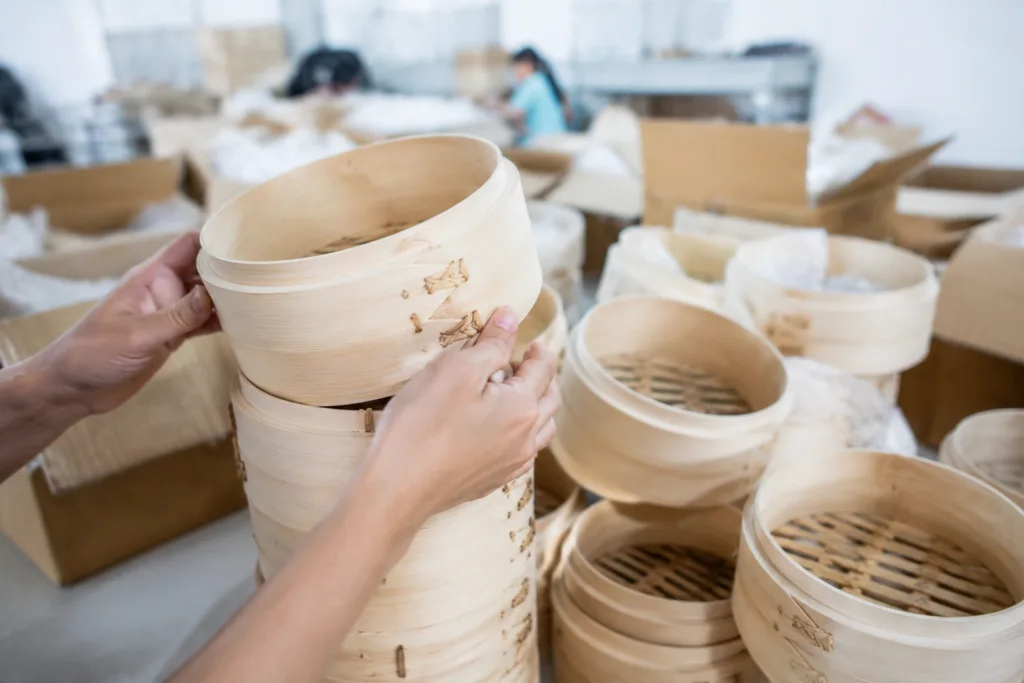
Stack the layers as they would be used and lift them carefully. The layers should seat properly without sliding too easily or catching at odd angles. If stacking feels unstable, the dimensional control may be inconsistent across units.
Failure points in poorly joined layers
The most common weak points are the rim joints, sidewall attachment zones, and areas where the base weave meets the frame. Problems here may not be obvious in a single sample. They often appear after repeated moisture exposure or when the basket is handled in a busy kitchen or retail demonstration setting.
Expected lifespan and maintenance logic
No bamboo steamer lasts forever. Lifespan depends on use frequency, drying habits, storage, and build quality. In many cases, a well-made unit will hold shape and function reliably when it is dried properly after use and not stored while damp. A lower-grade unit may start loosening much earlier under the same conditions.
If your assortment includes different sizes or retail bundles, it also helps to compare how stackable bamboo steamer baskets are structured, since stable stacking design often reveals more about production control than isolated appearance does.
high quality bamboo steamer
What this keyword should mean in real buying terms
For a buyer, high quality bamboo steamer should mean consistent material selection, clean finishing, stable rims, balanced lid fit, even weave tension, and repeatable dimensions across a production lot. It should not mean only premium-looking photography or a darker natural tone.
What buyers should not confuse with quality
Do not confuse heavier weight with better build. Do not assume darker color means stronger bamboo. Do not treat handcrafted variation as an excuse for weak shaping or rough finishing. And do not accept a good sample as proof of bulk consistency unless incoming inspection standards are clear.
| Inspection Point | What Good Looks Like | Warning Sign |
|---|---|---|
| Rim shape | Round, even, smooth | Warped, oval, rough joint |
| Lid fit | Balanced, low wobble | Rocking, gaps, misalignment |
| Weaving | Even tension and spacing | Loose sections, lifted strands |
| Surface finish | Clean touch, low burrs | Splinters, rough cuts |
| Odor | Mild natural bamboo smell | Strong sour or chemical smell |
| Stacking | Stable layer seating | Sliding or poor nesting |
Quick Inspection Checklist Upon Delivery
What to check first when the carton is opened
Start with packaging condition, odor, moisture signs, and visible shape consistency across a sample group. Then inspect a few units from different carton positions, not only the top layer. This helps reveal compression, storage, or batch consistency issues.
Simple quality assurance steps for receiving teams
- Check rim roundness from eye level.
- Test lid seating on several units.
- Touch the rim and base for burrs.
- Press lightly on woven surfaces for tension consistency.
- Stack layers to confirm fit and alignment.
- Note any strong odor or damp feeling immediately.
How to document and flag issues for suppliers
Use clear photos, short videos, carton references, and a simple defect list. Group issues by type: shape, finish, odor, fit, or stability. This makes supplier communication more productive because the problem is tied to a physical condition rather than a vague complaint. If the project involves custom retail programs, working with a custom bamboo products manufacturer can help align inspection standards earlier in development.
Buyer’s Checklist: Essential Criteria Summarized
Fast-reference checklist for sourcing teams
- Bamboo strips should be consistent and not brittle.
- Weaving should be even, firm, and not visibly loose.
- Rims should be round, smooth, and securely joined.
- Lids should sit properly with balanced alignment.
- Surfaces should be clean, with minimal burrs or splinters.
- Odor should be mild and natural, not harsh or sour.
- Layers should stack securely without unstable movement.
- Lot consistency should be checked across multiple cartons.
What matters most in bulk decisions
For bulk ordering, consistency usually matters more than sample perfection. One excellent unit is less useful than a stable production standard. Ask how shape, fit, and finish are checked during production and packing. Also consider how the steamer will be sold: kitchenware retail, restaurant supply, gift bundle, or branded cookware line. Different channels may tolerate different levels of natural variation, but basic function and safety of handling should remain strong.
OEM and customization questions worth asking
If you plan custom sizes, bundled sets, or retail packaging, ask early how changes affect shape control, stacking fit, and inspection points. Handle design, basket depth, and accessory additions can all change production complexity. Buyers comparing development models may find it useful to review OEM vs ODM in bamboo manufacturing before finalizing the sourcing path.
Conclusion: How Quality Impacts Use, Retail, and Sourcing Decisions
A high quality bamboo steamer is the result of good material judgment, careful shaping, stable weaving, proper lid fit, and consistent finishing. Those details affect more than cooking performance. They influence retail presentation, claim rates, buyer confidence, and the ability to reorder with fewer surprises.
For sourcing teams and product buyers, the most practical approach is simple: inspect by function, structure, and consistency, not by appearance alone. When you build your checklist around real quality signals, you make better decisions for use, merchandising, and long-term supply planning. That quality-first mindset usually leads to stronger products and fewer avoidable problems later.
Frequently Asked Questions
How can I tell if a bamboo steamer is good quality?
A good-quality bamboo steamer usually has even weaving, a smooth rim, balanced lid fit, low burrs, mild natural odor, and stable stacking between layers.
Is a strong bamboo smell normal?
A light natural bamboo smell is normal, especially after unpacking, but a harsh chemical, sour, or mold-like odor should be treated as a warning sign and checked with the supplier.
Why does lid fit matter so much?
Lid fit affects how steam moves through the basket, so a lid that wobbles or sits unevenly can reduce cooking consistency and suggest weak shaping control.
Are small surface burrs a serious issue?
Small burrs may seem minor, but they often show inconsistent trimming or finishing and can create handling complaints in retail or repeated-use environments.
What should buyers check first when a shipment arrives?
Start with odor, visible warping, rim roundness, lid fit, weaving tension, and stacking stability across several samples from different cartons, not just one top unit.
Can a custom design affect bamboo steamer quality?
Yes, custom size, depth, handle shape, or bundled components can change production difficulty, so design changes should always be reviewed against fit, shape control, and stacking performance.