Why Finish Matters in Bamboo Home and Kitchen Products
When buyers compare bamboo products, they often focus first on shape, size, or price. In practice, finish plays a major role in how a product is perceived, where it fits in the market, and how well it supports a brand’s visual direction. In the discussion around natural vs carbonized bamboo, the choice is not only about light versus dark color. It also affects shelf appeal, packaging harmony, gift suitability, and how the final product feels in the hand.
For readers planning the next sourcing step, a useful next step is to explore the main differences between natural and carbonized bamboo finishes through Bamboo Wood Art’s broader manufacturer-facing product perspective. That helps buyers, retailers, and product developers connect finish decisions with category fit, customization direction, and the practical realities behind bamboo and wood product development.
For home and kitchen lines, this matters even more because bamboo products are usually purchased with both function and appearance in mind. A cutting board needs to look right on a countertop. A tray needs to feel consistent with the brand story. A gift-ready organizer needs to work with packaging, color palette, and target customer expectations. That is why finish selection should be treated as a product strategy decision, not a last-minute styling choice.
Understanding Natural and Carbonized Bamboo Finishes
What natural bamboo finish usually looks like
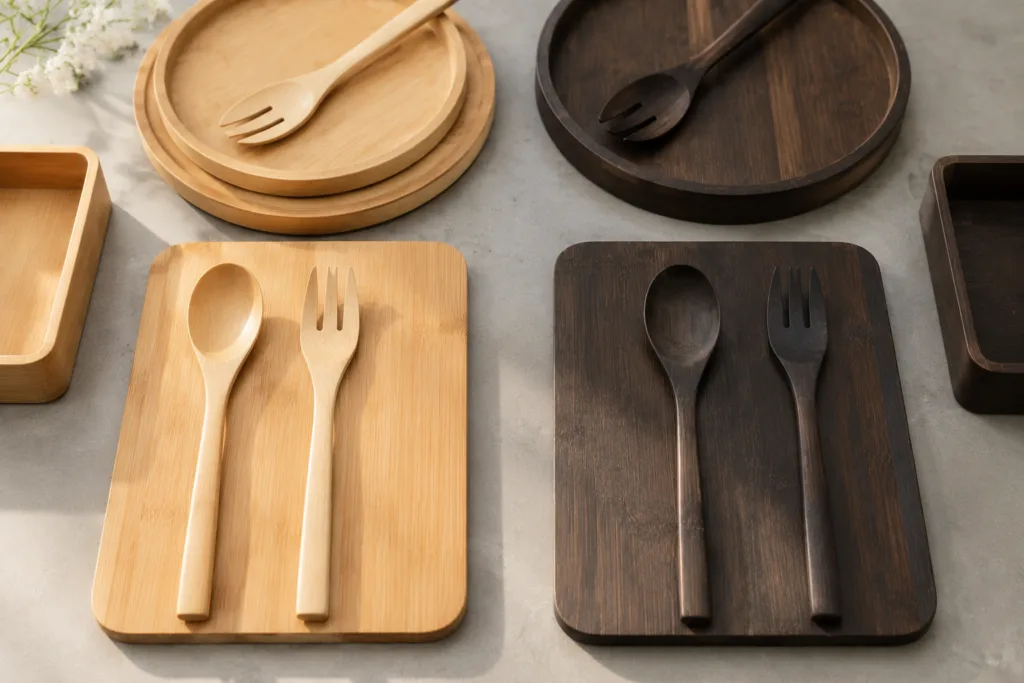
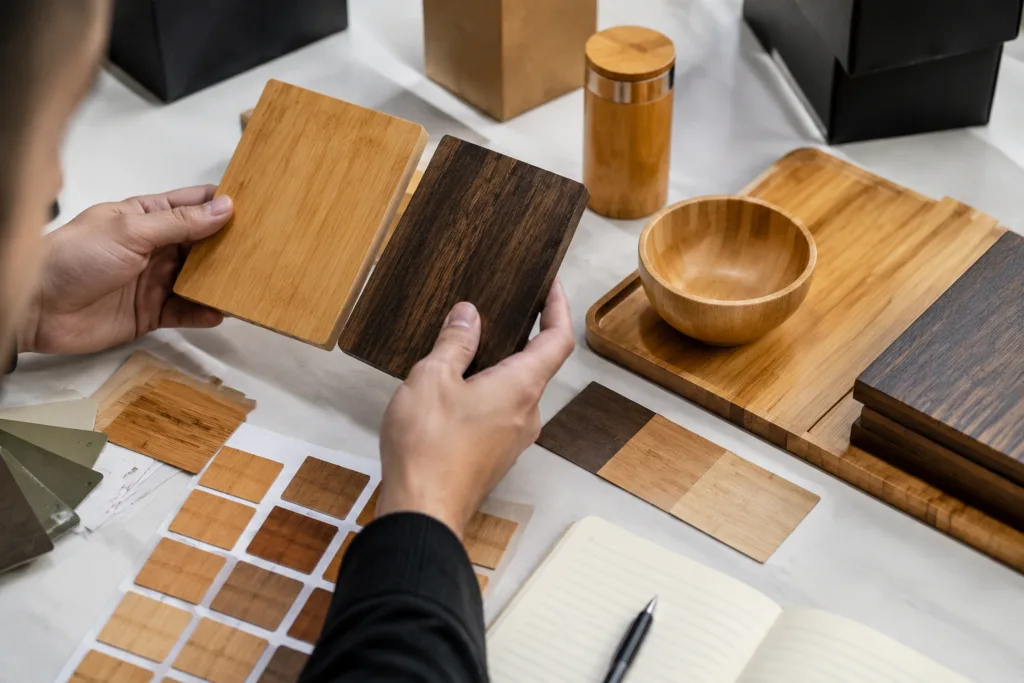
Natural bamboo typically shows a lighter, fresh straw-to-honey tone. It tends to feel bright, clean, and simple. In many product categories, this finish supports a modern, minimal, Scandinavian, wellness, or eco-conscious visual direction. It often makes product engraving, laser marking, and light packaging concepts feel crisp and approachable.
What carbonized bamboo finish usually looks like
Carbonized bamboo is heat-treated to produce a deeper brown tone. The color usually appears warmer, richer, and more mature than natural bamboo. For many buyers, it creates a stronger sense of contrast and visual depth. This finish often works well in kitchen products with a premium, classic, or gift-oriented look.
Why the finish comparison matters for sourcing teams
In a factory setting, finish is not just a design preference. It can affect batch consistency expectations, product matching across a collection, and the final relationship between product, insert card, and outer packaging. For sourcing teams comparing factories or evaluating development options, the natural vs carbonized bamboo choice often shapes the whole direction of the line.
natural vs carbonized bamboo
The core difference in one practical view
If the product line needs brightness, visual cleanliness, and broad everyday appeal, natural bamboo often fits better. If the line needs warmth, stronger color depth, and a more giftable or furniture-like look, carbonized bamboo is often the better choice. Neither is automatically superior. The better finish depends on the product story, end user, and sales channel.
Common misconception buyers should avoid
A common mistake is treating natural bamboo as the standard option and carbonized bamboo as only a color variant. In reality, each finish can shift how consumers read the product. The same tray design may feel casual and fresh in natural bamboo, but more refined and premium in carbonized bamboo.
Key Differences: Natural vs Carbonized Bamboo
Color, Grain, and Surface Texture Comparison
Color impact at first glance
Natural bamboo usually appears lighter and more open. It tends to brighten kitchens, bathrooms, and retail displays. Carbonized bamboo usually appears darker and more grounded. It can create a stronger visual anchor in a product assortment.
Grain visibility and visual rhythm
The grain pattern in bamboo can read differently depending on the finish, construction style, and lighting. Natural bamboo often shows a more lively tonal contrast. Carbonized bamboo may soften or deepen that contrast depending on how the material was processed. That can influence whether the product feels more contemporary or more traditional.
Surface character and perceived refinement
Even when two products are sanded and coated to similar standards, the finish color can change how smoothness is perceived. Darker surfaces often make subtle variation more visible, while lighter ones can feel visually cleaner from a distance. This is important for buyers evaluating sample approval and retail presentation.
Tactile Qualities and Consumer Perceptions
Touch matters, especially for kitchen utensils, handles, trays, and desktop organizers. Consumers do not only see bamboo; they also judge whether it feels warm, dry, smooth, or substantial. Natural bamboo often gives a fresh and light impression. Carbonized bamboo often feels warmer and more decorative, even when the actual form is the same.
In gift and retail channels, that tactile reading can affect perceived value. A darker finish may be seen as more elevated in some markets, while a lighter finish may feel more natural and honest in others. This is one reason why product developers should compare both finishes against the packaging concept instead of judging them in isolation.
How Finish Influences Brand Style and Positioning
Natural bamboo often aligns with brands that emphasize simplicity, clean living, natural kitchens, or everyday utility. Carbonized bamboo often supports warmer interior styles, gift sets, heritage-inspired packaging, or a slightly more formal product tone.
Brand teams sometimes overlook how strongly finish changes positioning. The same SKU can move upmarket or downmarket in appearance based on finish, edge shape, and packout. That is why finish selection should be reviewed alongside color palette, logo treatment, and the intended retail environment.
Product Application Scenarios
Kitchenware: Cutting Boards, Utensils & Storage Solutions
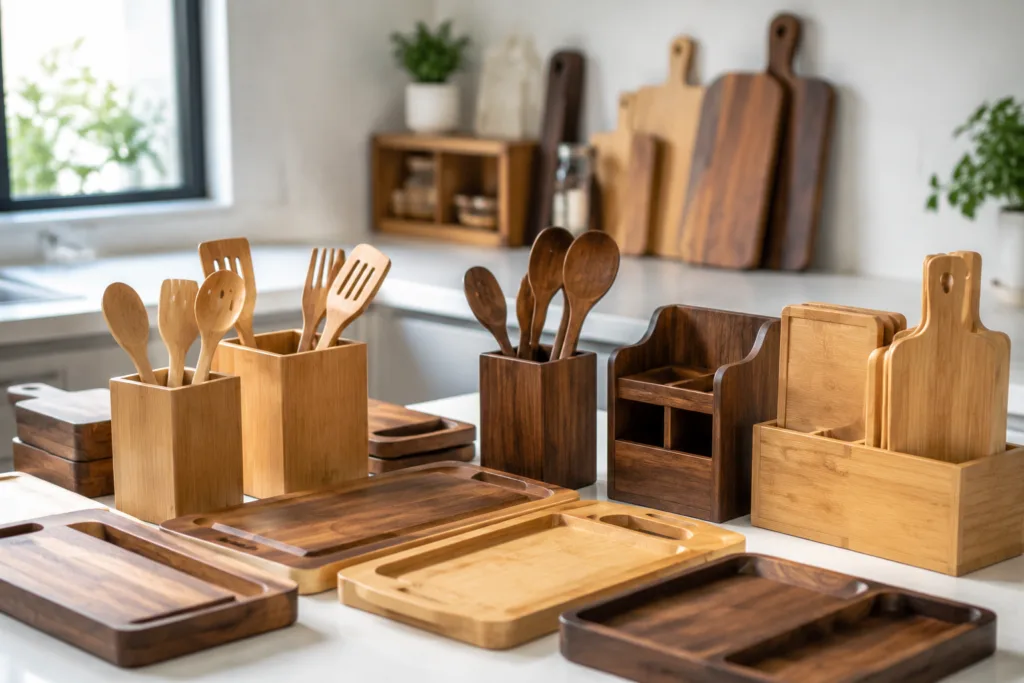
For cutting boards, natural bamboo often works well when the line is focused on freshness, clean meal prep visuals, and broad household appeal. It usually pairs easily with bright kitchens and modern countertop styling. Carbonized bamboo often works better when the goal is stronger display contrast or a richer, gift-oriented look.
Utensils and countertop storage follow similar logic. Lighter utensils may fit wellness, organic, or minimalist branding more easily. Darker utensil sets may suit premium boxed sets or mixed-material collections with darker ceramics, black hardware, or warm-toned packaging. Readers considering board development in particular may also want to review custom bamboo cutting board options to see how finish choice interacts with shape, edge details, and buyer-facing customization decisions.
Home Goods: Organizers, Trays & Décor Items
Outside the kitchen, natural bamboo often suits bathroom organizers, drawer inserts, desktop storage, and simple trays because it feels clean and adaptable. It blends easily with neutral interiors and makes small spaces feel brighter.
Carbonized bamboo often works well for valet trays, serving trays, desk accessories, and decorative storage where a warmer mood is preferred. In these categories, the finish can do a lot of the design work. A relatively simple structure can still feel more elevated if the tone and grain work well with the setting.
At Bamboo Wood Art, finish reviews for home goods often come down to one question: should the product quietly blend into the space, or should it add visible warmth and character? Natural bamboo usually supports the first direction, while carbonized bamboo often supports the second.
Gift and Retail Channels: Shelf Appeal and Unboxing Experience
Gift and retail presentation adds another layer to the natural vs carbonized bamboo decision. Lighter bamboo can make packaging feel fresh, friendly, and accessible. Darker bamboo can increase contrast inside the box and often photographs well for premium online listings.
For shelf presentation, carbonized bamboo may create stronger visual separation when competing with pale wood or kraft-heavy packaging around it. Natural bamboo, however, often feels more open and casual, which can help in stores where approachable price perception matters.
Unboxing also matters. A dark tray in a black box may look elegant but too heavy if the brand wants softness. A natural organizer in a light paper box may feel clean and coherent, but possibly less gift-like in a formal holiday set. The finish should support the emotional tone of the purchase.
Suitability Assessment
Matching Finish to Brand Identity and End Market
Brands aimed at mass retail, wellness, kitchen basics, or modern home categories often lean toward natural bamboo because the look is familiar and easy to merchandise. Brands targeting gifting, boutique retail, premium hospitality, or warm interior aesthetics often lean toward carbonized bamboo.
This does not mean the market split is fixed. A premium brand can use natural bamboo very successfully if the design language is intentionally minimal. A mainstream retail line can also use carbonized bamboo if the product needs stronger visual distinction. The finish should match the brand’s broader design system rather than follow trend assumptions.
Customization & OEM/ODM Potential of Each Finish
From a development standpoint, both finishes can support OEM and ODM projects, but they may lead to different decoration choices. Laser engraving, printed logos, shaped handles, edge profiling, and mixed-material combinations can all read differently depending on whether the base material is light or dark.
For example, logo contrast may feel sharper on one finish than the other. Packaging inserts may need adjustment to prevent the product from looking too washed out or too heavy. Buyers exploring broader development pathways may also want to review bamboo products manufacturing capabilities when comparing how a manufacturer handles finish options across categories.
Color development is another factor. If the product line may extend beyond standard bamboo tones, it helps to understand the relationship between base material and finishing possibilities. In that context, product teams may also benefit from reviewing color customization options and carbonization in bamboo to assess how finish strategy fits a wider assortment plan.
Packaging Compatibility: Visual and Tactile Value
Packaging should support the finish, not fight it. Natural bamboo often pairs well with white, soft gray, muted green, or kraft packaging systems. Carbonized bamboo often works better with darker neutrals, warm metallic accents, deeper paper tones, or more formal insert layouts.
Tactile value also matters. A product that feels warm and rich should not arrive in packaging that feels thin or visually weak. In many cases, the stronger the finish personality, the more important packaging balance becomes. Buyers should test not only the product alone, but the full packout experience.
Performance and Practical Considerations
Durability and Wear Over Time
Buyers often ask whether natural or carbonized bamboo is more durable. In practical terms, finish color alone does not answer that question. Product lifespan is usually influenced by bamboo construction, adhesive quality, machining, edge finishing, surface coating if used, and how the item is used and maintained.
What can change is the way wear becomes visible. On some products, scratches, dryness, or tonal change may show differently depending on the finish. A darker surface can reveal certain marks more clearly in strong light, while a lighter surface may show stains or discoloration in a different way. The best approach is to assess the finish together with the product’s actual use case.
Cleaning, Maintenance, and User Experience
For most home and kitchen goods, user experience is shaped by how easy the product is to wipe clean, how it looks after repeated use, and whether it keeps a consistent appearance over time. Natural bamboo often gives a clean, low-complexity visual impression after routine care. Carbonized bamboo often keeps a warm, richer look that many consumers find attractive even with light variation from use.
Neither finish removes the need for proper care instructions. Good care messaging matters more than finish preference when the product is exposed to food contact, moisture, or frequent washing.
MOQ and Sourcing Logic for Different Finishes
When choosing between natural vs carbonized bamboo, MOQ logic should be discussed early. Different finishes may affect production planning, especially if the buyer wants one product line in two tones, or wants exact visual matching across multiple SKUs. The sourcing discussion should cover finish consistency expectations, assortment planning, and whether mixed-finish production is practical at the intended scale.
It is also worth comparing finish choice against broader material strategy. In some cases, the real decision is not only bamboo finish but whether bamboo is the right category base versus another wood option. For that wider perspective, buyers evaluating product range may find value in reviewing strategic material selection for bamboo vs hardwood before finalizing a line architecture.
From a manufacturer’s point of view, early alignment on finish preference can reduce sample revisions and improve decision speed. That is particularly useful for buyers building coordinated collections rather than single items.
Summary Table: Quick Reference – Natural vs Carbonized by Scenario
| Scenario | Natural Bamboo | Carbonized Bamboo |
|---|---|---|
| Modern kitchen basics | Usually a strong fit for bright, clean presentation | Can work, but may feel heavier visually |
| Gift-ready cutting boards | Approachable and fresh | Often stronger for premium gifting tone |
| Bathroom or drawer organizers | Often better for light, neat interiors | Better when warmth is desired |
| Decorative trays | Simple and versatile | Usually stronger for richer visual character |
| Retail shelf contrast | Works well in light, open displays | Often stands out more in mixed assortments |
| Minimalist branding | Usually the easier choice | Works if the brand uses warm minimalism |
| Formal packaging systems | Can feel soft and clean | Often feels more substantial and giftable |
| Large coordinated collections | Good for broad everyday appeal | Good when the line needs stronger visual depth |
Choosing the Optimal Bamboo Finish for Your Product Line
The natural vs carbonized bamboo decision is usually best made by stepping back from personal preference and looking at the full product context. The right finish should support the product’s use, the customer’s expectations, the brand’s visual language, and the packaging system around it. That is why sample review should include not only the item itself, but also lighting conditions, display environment, and packout concept.
Natural bamboo often works best when the goal is clean, modern, versatile presentation. Carbonized bamboo often works best when the goal is warmth, contrast, and a more mature visual tone. In many cases, the strongest answer is not which finish is better overall, but which finish makes the product line more coherent and easier to position.
For sourcing teams and product developers, a well-chosen finish can simplify assortment logic, reduce design mismatch, and make the final line more convincing in both retail and wholesale channels. A practical, finish-first review process usually leads to better product decisions.
Frequently Asked Questions
Does carbonizing affect product quality?
Carbonizing mainly changes the bamboo’s color through heat treatment, but overall product quality still depends more on construction, machining, finishing quality, and how the item is made for its intended use.
Which finish is better for eco-aware buyers?
That depends on how the buyer defines eco value, because many buyers look at the full product story, including material use, durability, packaging, and long-term usability rather than finish color alone.
How do color and texture influence consumer preference?
Lighter bamboo often feels cleaner, fresher, and more casual, while darker carbonized bamboo often feels warmer, richer, and more gift-oriented, so preference usually follows the product setting and brand style.
Is natural bamboo always better for kitchen products?
No, natural bamboo is often a strong fit for clean and modern kitchen lines, but carbonized bamboo may work better when the product needs a warmer, more premium, or more decorative appearance.
Can both finishes be used in one product collection?
Yes, but it usually works best when the contrast is intentional and the packaging, color palette, and product roles are planned carefully so the assortment feels coordinated rather than mixed by accident.
What is the safest way to choose between natural and carbonized bamboo?
The safest approach is to compare both finishes against the actual product design, packaging concept, target market, and sales channel instead of choosing from a material sample alone.